
❦
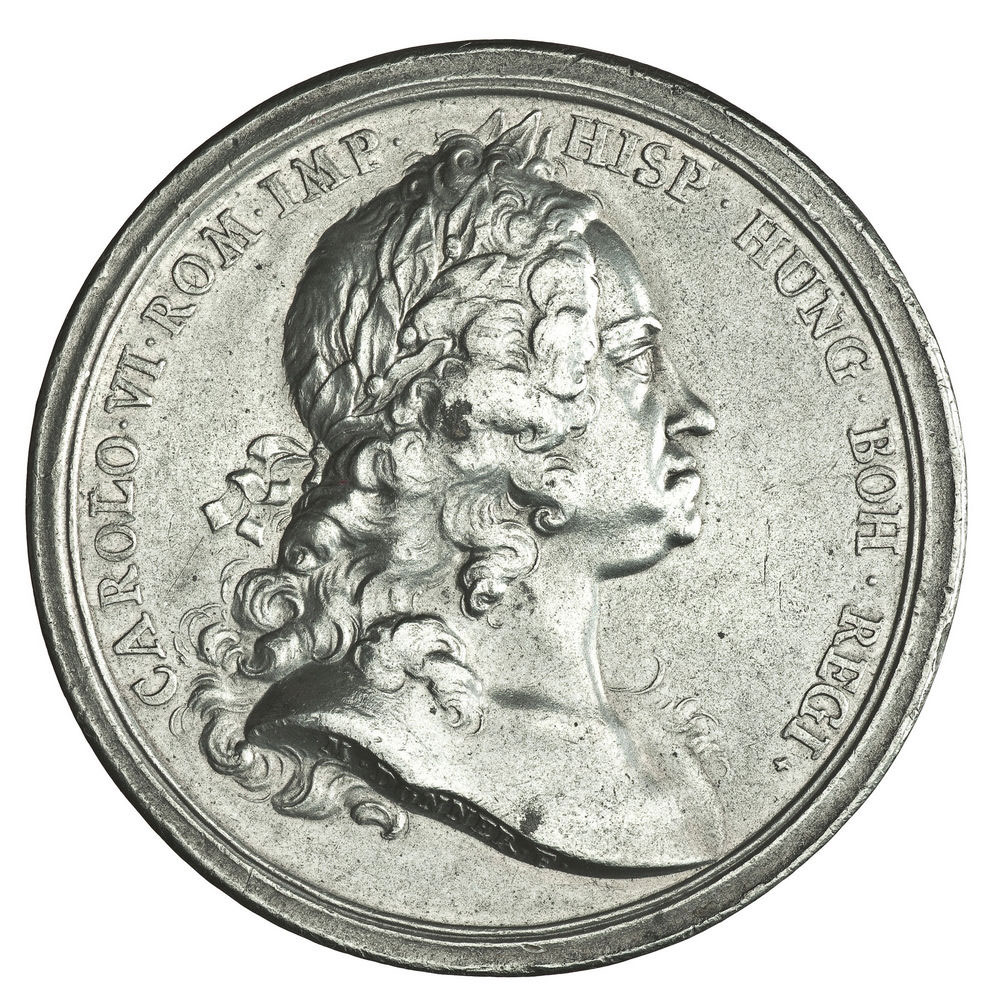
Matthäus Donner, Medale dedykowane cesarzowi Karolowi VI Habsburgowi (1685–1740) z okazji położenia kamienia węgielnego pod siedzibę Akademii Rycerskiej w Legnicy 24 czerwca 1735 r., 1735
Cyna, srebro, bite, śred. 54 mm, waga 46,0944 g, śred. 53 mm, waga 52,5862 g, nry inw.: MNWr X-19040, zakupiony do zbioru w 1973 r., MNWr X-26175
Według opisów tego medalu z 1735 r. oraz z 1741 r. przedstawiona na rewersie kobieta z modelem akademii to Minerwa – patronka sztuk pięknych i nauk, a trzymany przez nią róg obfitości oznacza cesarską hojność wobec nauk, w szczególności w stosunku do akademii w Legnicy. W niektórych późniejszych publikacjach interpretowana jest jako personifikacja Śląska. Natomiast Saturn (Chronos), według interpretacji współczesnych medalowi, jest symbolem „złotych czasów“, które nadejdą dla tej instytucji dzięki pomyślności i opiece cesarza.
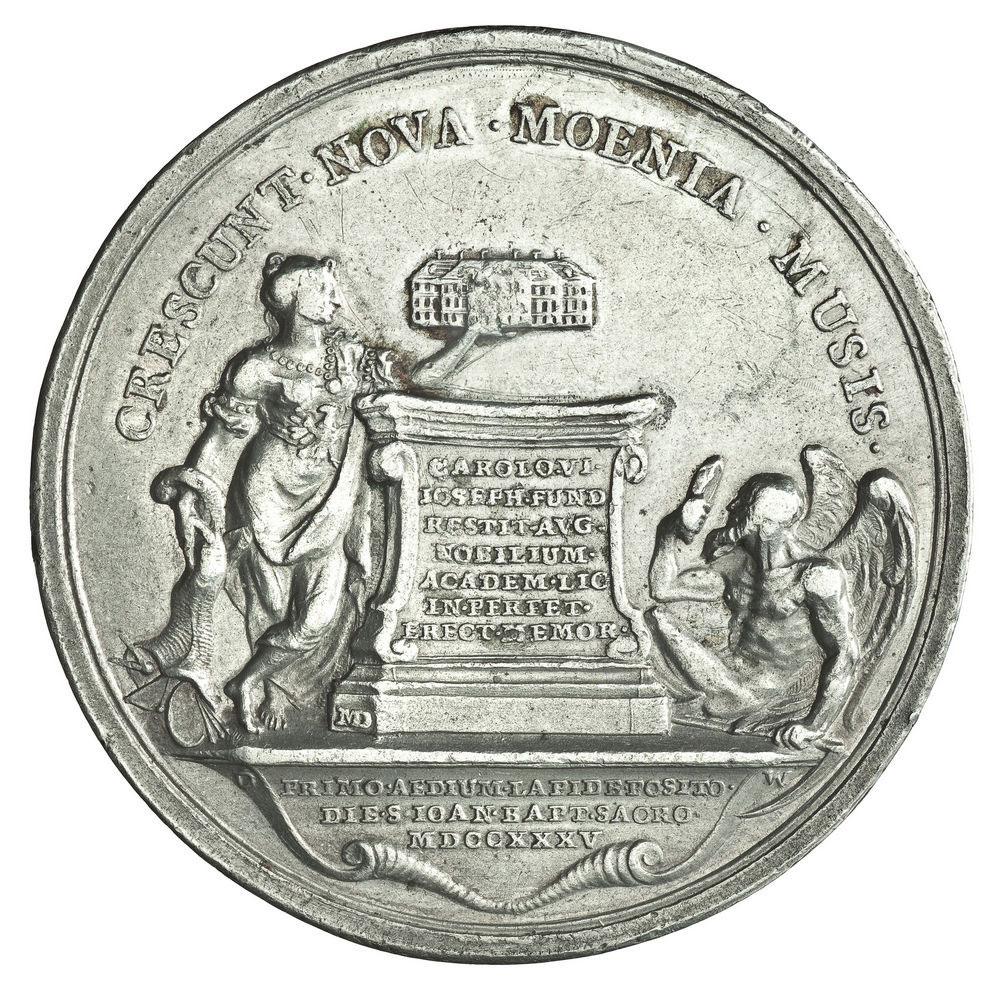
According to the descriptions of the medal from 1735 and 1741, the female figure with the model of the Academy’s building is the goddess of fine arts and sciences Minerva (Athena) and the cornucopia in her hand symbolizes the imperial generosity towards institutions promulgating them and in particular towards the Knightly Academy in Legnica. In some later publications, the figure is interpreted as the personification of Silesia. In publications contemporary with the medal’s creation, the figure of Saturn (Chronos) is interpreted as symbolizing the “Golden Age” that would come for the Knightly Academy thanks to the Emperor’s support and generosity.
❦
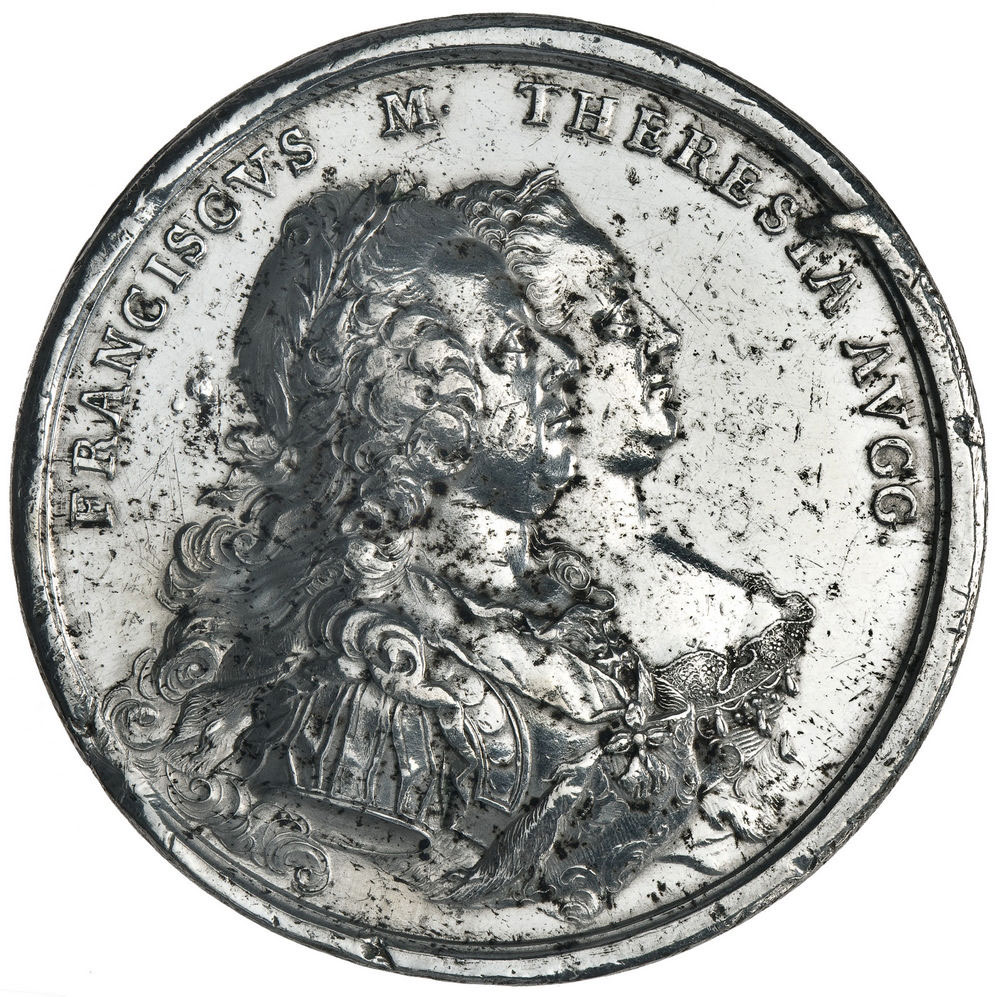
Autor nieznany, Medal upamiętniający wyzwolenie oblężonego Ołomuńca od wojsk pruskich 2 lipca 1758 r., od 1758
Cyna, bity, śred. 46 mm, waga 32,3875 g, nr inw. MNWr X-18743
Wydarzenia związane z wojnami śląskimi ilustrowane były w sztuce medalierskiej m.in. za pomocą „schematycznych” przedstawień bitew lub alegorii. Przykładem tego drugiego sposobu przedstawiania jest rewers medalu ukazujący sukces wojsk austriackich, którego rezultatem był odwrót armii pruskiej spod Ołomuńca 2 lipca 1758 r. Po lewej pokazana została stojąca postać w zbroi, interpretowana jako bogini wojny Bellona (Schau- und Denkmünzen welche unter der Regierung der Kaiserinn Königinn Maria Theresia geprägt worden sind, Wien 1782, s. 172, nr CXXXVI) lub Pallas Atena. Przed nią klęczy, podając wieniec laurowy, personifikacja Moraw. Według opisu takiego medalu z 1782 r. bogini symbolizuje tutaj cesarzową Marię Teresę.
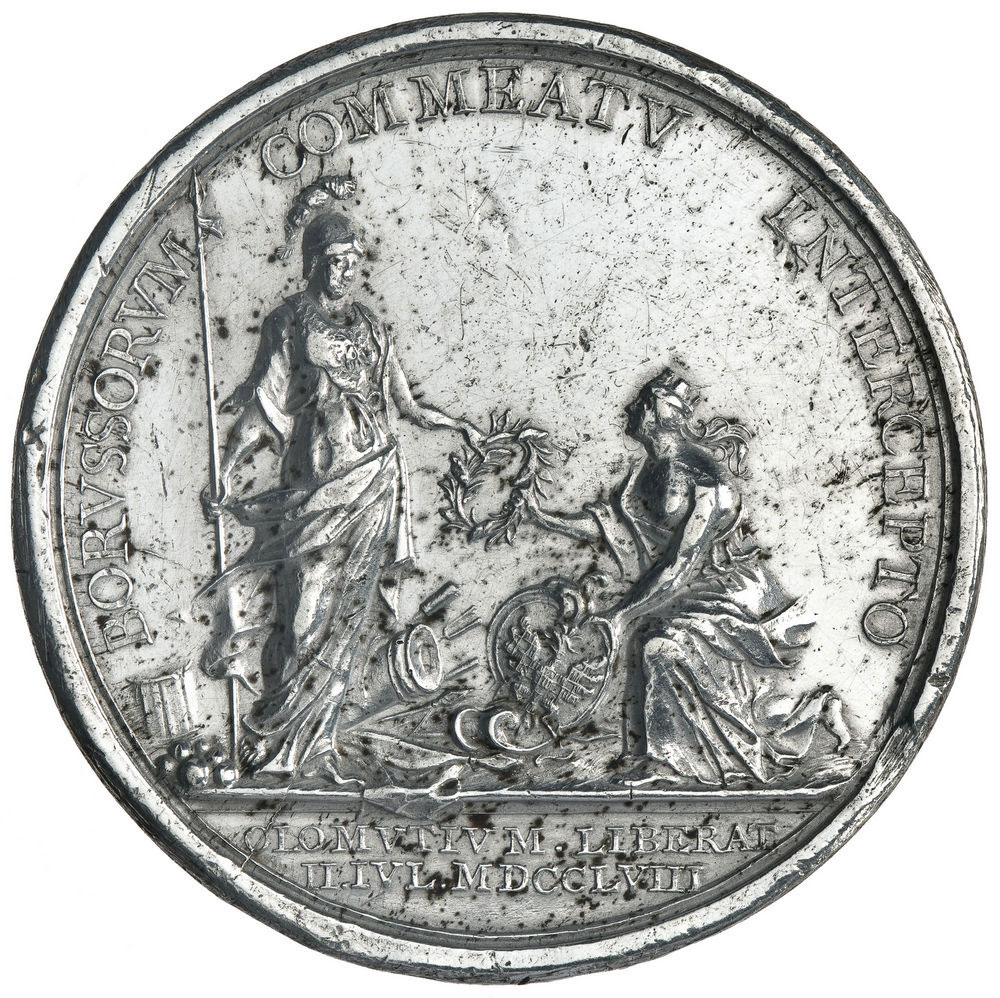
Events of the Silesian Wars were represented in medals using schematic depictions of battles or allegorical formulas. The latter approach is exemplified by the medal’s reverse celebrating the success of the Austrian army resulting in the retreat of the Prussian forces ending the siege of Olomouc on 2 July 1758. On the left, there is a standing female figure wearing an armour interpreted as the goddess of war Bellona (Schau- und Denkmünzen welche unter der Regierung der Kaiserinn Königinn Maria Theresia geprägt worden sind, Wien 1782, p. 172, no. CXXXVI) or Pallas-Athena. She is presented with a laurel wreath by the kneeling personification of Moravia. A description of a similar medal dating to 1782 interprets the goddess as symbolizing the Empress Maria Theresa.
❦
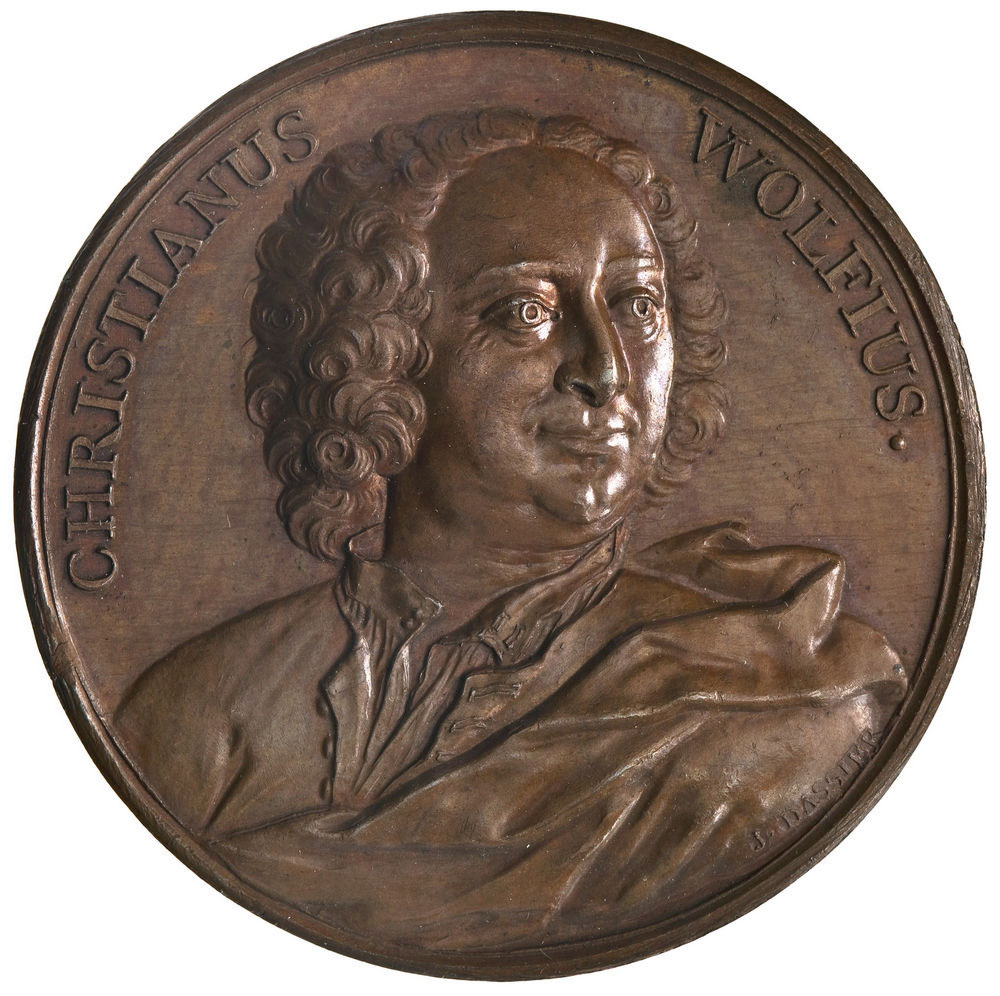
Jean Dassier, Medal matematyka i filozofa Christiana Wolffa (1679–1754), XVIII w. (do 1763)
Miedź, bity, patynowany, śred. 43 mm, waga 28,7216 g, nr inw. MNWr X-13161
Christian Wolff urodził się we Wrocławiu i ukończył tu Gimnazjum Marii Magdaleny. Studiował na Uniwersytecie w Jenie. Wykładał na uniwersytetach w Halle i w Marburgu.
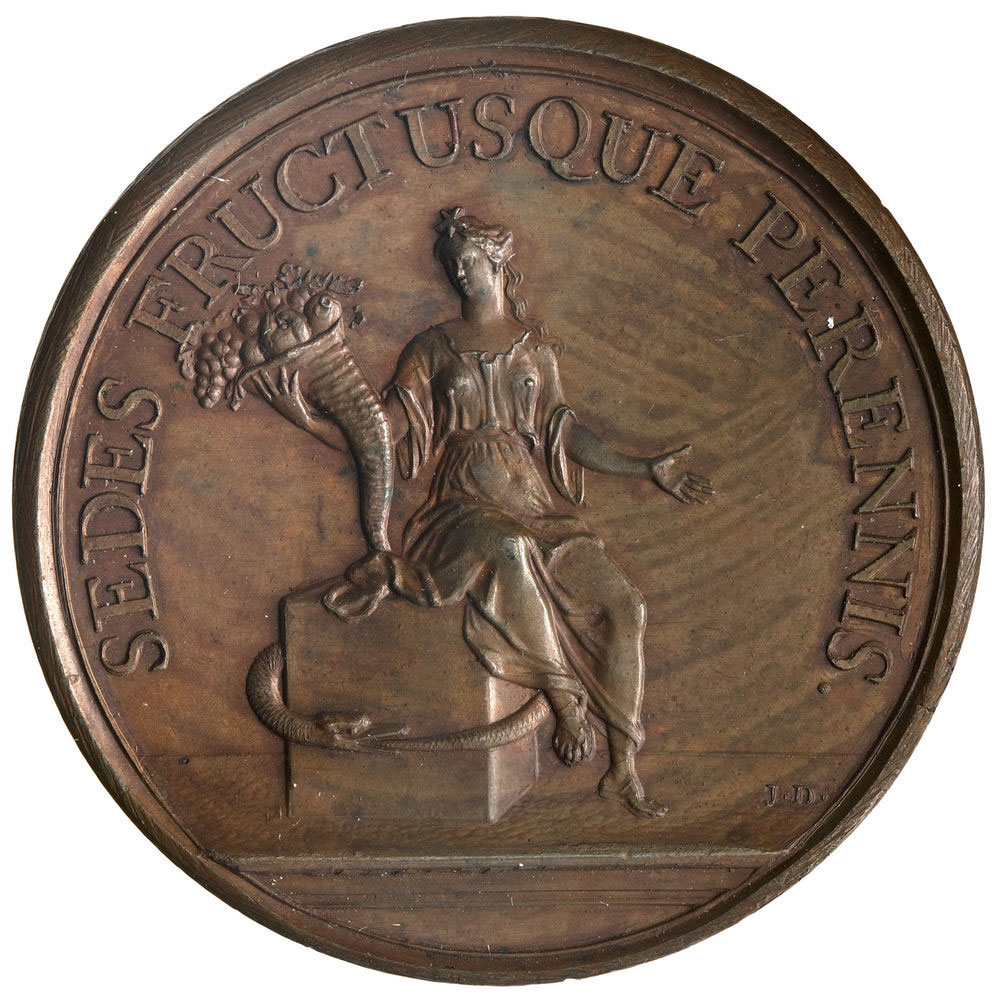
Przedstawiony na rewersie wąż zjadający swój ogon to symbol wieczności. Według publikacji Johanna Christiana Kundmanna Silesii in nummis, oder berühmte Schlesier in Müntzen: so durch grosse Helden-Thaten, durch Hohe und wichtige Amts-Würden, oder durch Gelehrsamkeit und Schrifften, ihren Nahmen unvergeßlich gemacht z 1738 r. postać na rewersie to Mądrość Świata (Welt-Weiβheit). Terminowi „Welt-Weiβheit” poświęcony jest rozdział pierwszy dzieła Christiana Wolffa Vernünfftige Gedancken von den Kräfften des menschlichen Verstandes und ihrem richtigen Gebrauche in Erkäntniss der Wahrheit, den Liebhabern der Wahrheit mitgetheilet. Tam też znajduje się definicja tego terminu jako nauki, która obejmuje wszystkie „możliwe” rzeczy. Takie same przedstawienia i inskrypcje na rewersie znajdują się także na innych medalach autorstwa Jeana Dassiera: Cycerona (106–43 p.n.e.) i prawnika Johna Seldena (1584–1654).
Christian Wolff was born in Wrocław where he also graduated from the Mary Magdalene Gymnasium. He studied at the University in Jena. He lectured at the Universities in Halle and Marburg.
Encircling the reverse of the medal, the snake eating its own tail is the symbol of eternity. According to Johann Christian Kundmann’s book Silesii in nummis, oder berühmte Schlesier in Müntzen: so durch grosse Helden-Thaten, durch Hohe und wichtige Amts-Würden, oder durch Gelehrsamkeit und Schrifften, ihren Nahmen unvergeßlich gemacht (1738), the featured figure personifies the Wisdom of the Universe (Welt-Weiβheit). Significantly, the first chapter of Christian Wolff’s treatise Vernünfftige Gedancken von den Kräfften des menschlichen Verstandes und ihrem richtigen Gebrauche in Erkäntniss der Wahrheit, den Liebhabern der Wahrheit mitgetheilet is devoted to this term and concept, defining it as the science “encompassing all things possible.” The same images and inscriptions feature on the reverse of other medals by Jean Dassier: of Cicero (106–43 BCE) and lawyer John Selden (1584–1654).
❦
Zakład Abrahama Remsharta, Medal śrubowy króla pruskiego Fryderyka II Hohenzollerna (1712–1786) związany z wojną siedmioletnią, 1763–1790
18 akwafort, srebro, bity, wykończony ręcznie, śred. 47 mm, waga 23,1208 g, papier, nr inw. MNWr X-9304
We wnętrzu egzemplarza tego medalu śrubowego ze zbiorów Muzeum Narodowego we Wrocławiu znajduje się 18 ręcznie kolorowanych akwafort. Dwie przynależą do wewnętrznych stron medalu–pudełka i przedstawiają księcia Fryderyka Henryka Ludwika, brata Fryderyka Wielkiego, generała podczas wojny siedmioletniej na tle sceny bitewnej oraz huzara z 5. pułku. Kolejnych 16, połączonych ze sobą, ponumerowanych i podpisanych prezentuje wydarzenia wojenne.
W dolnej części akwaforty z huzarem znajduje się sygnatura: Abraham Remshart/ Silbertr: excud:/ Aug:Vind: [Abraham Remshart tokarz wyrobów ze srebra wykonał Augsburg].
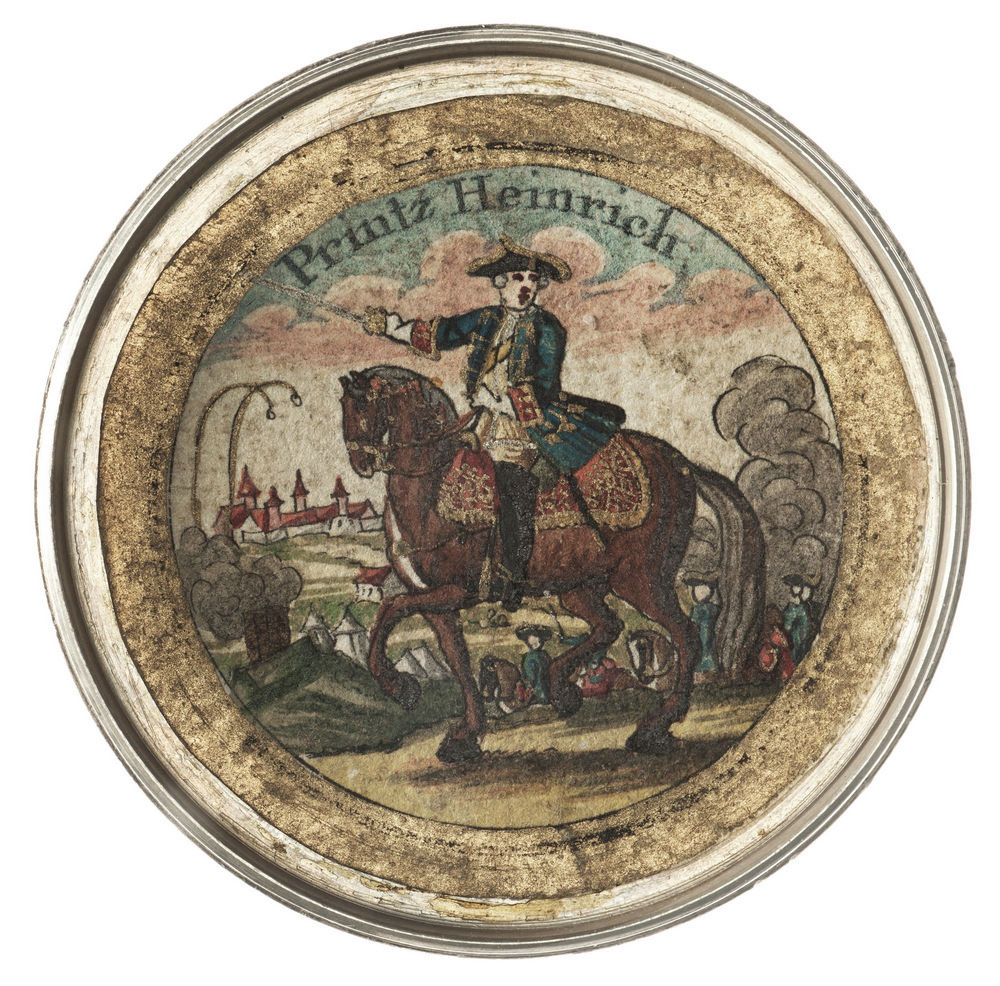
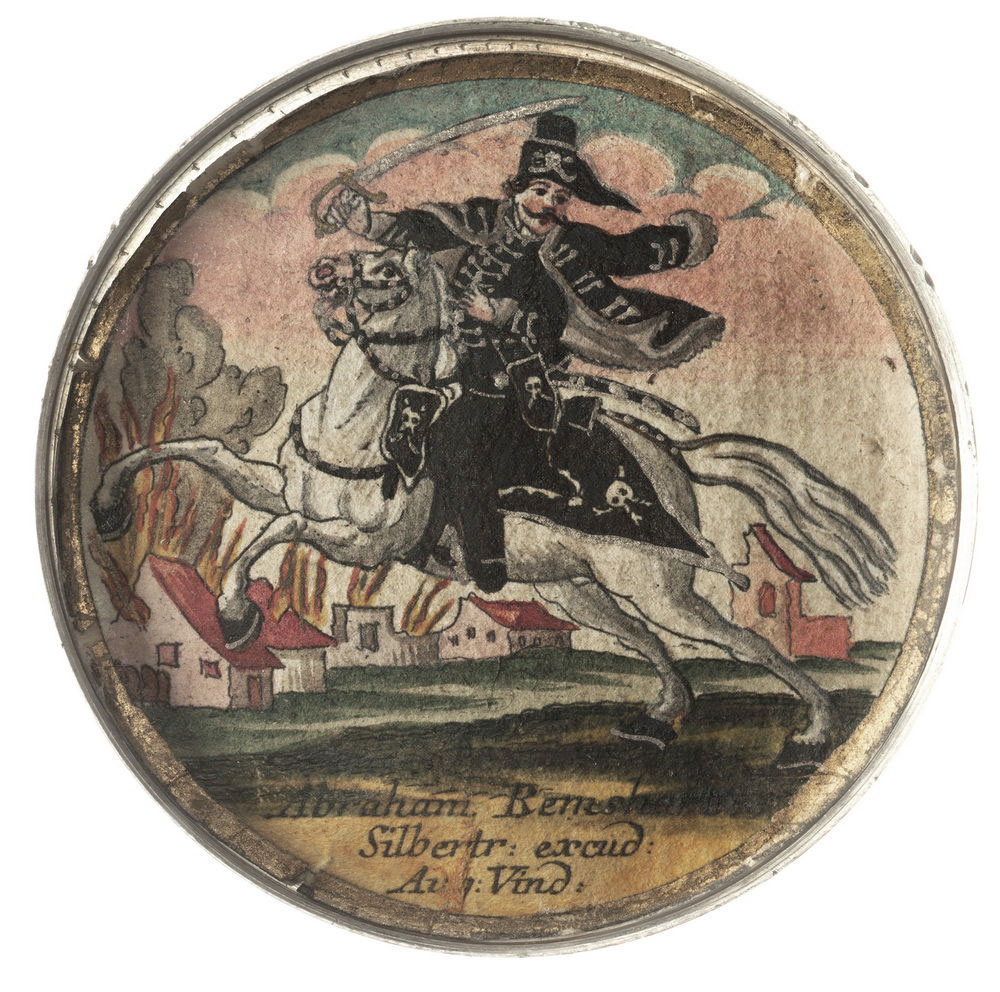
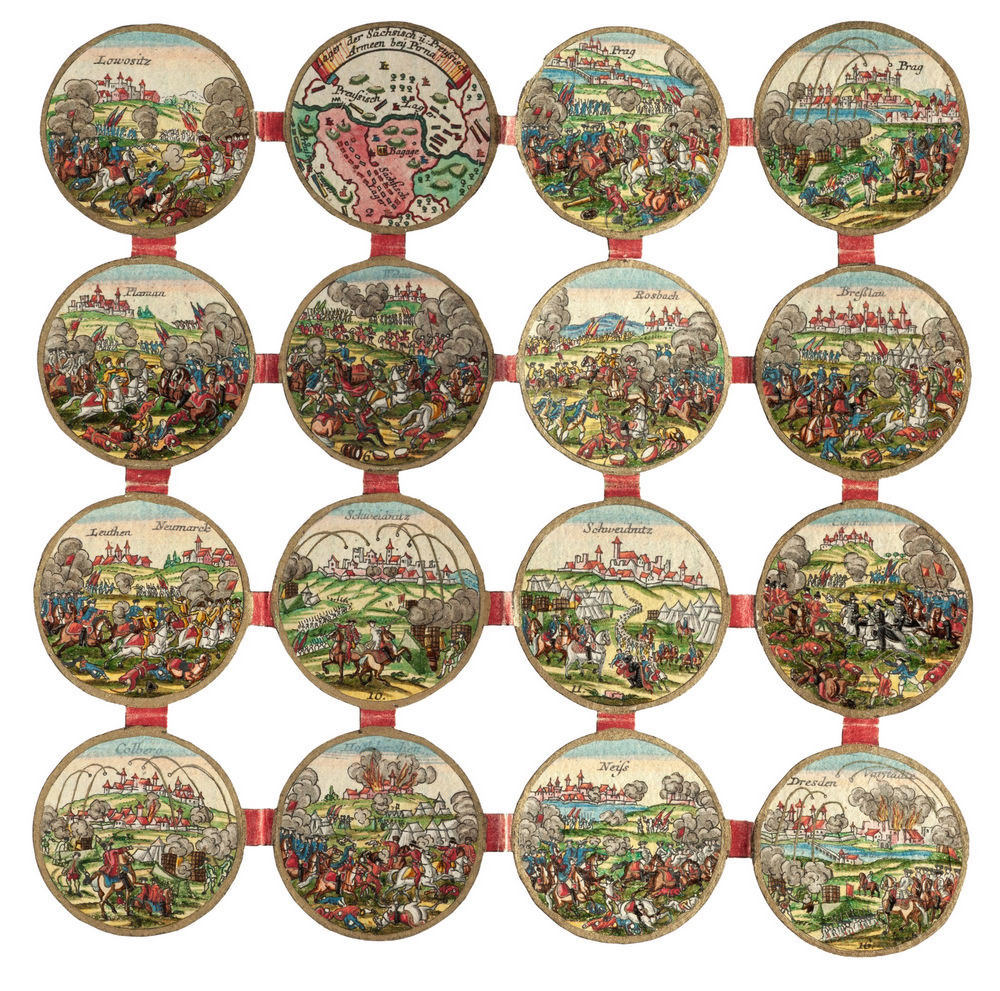
The box medal on display contains inside eighteen miniature etchings: one depicting Prince Friedrich Heinrich Ludwig Hohenzollern, brother of King Frederick William the Great and general during the Seven Years’ War, with a battle scene in the background; one with the figure of a hussar, and sixteen scenes, joined, numbered, and captioned, picturing events from the Silesian Wars.
Signature at the bottom of the etching with a hussar reads: Abraham Remshart/ Silbertr: excud:/ Aug:Vind: [made by silver turner Abraham Remshart Augsburg].
❦
Johann Leonard Oexlein, Medal upamiętniający porwanie króla polskiego Stanisława Augusta Poniatowskiego (1732–1798) 3 listopada 1771 r., 1772
Srebro, bity, śred. 43,5 mm, waga 21,7063 g, nr inw. MNWr X-9920
Medal ten upamiętnia wydarzenie, które rozegrało się 3 listopada 1771 r. na ulicy Kapucyńskiej (obecnie Miodowej) w Warszawie i odbiło się echem w całej Europie. Grupa spiskowców związanych z konfederacja barską porwała króla Stanisława Augusta, którego uważali za marionetkę Rosji. Jak donosiły „Wiadomości Warszawskie” z 6 listopada 1771 r., tego dnia między godziną dziewiątą a dziesiątą król Stanisław August Poniatowski powracał od kanclerza wielkiego litewskiego, „w małey liczbie ludzi swoich” (za: „Wiadomości Warszawskie” 1771, nr 89, [Suplement, s. 1]), kiedy to między pałacem biskupa krakowskiego a pałacem hetmana wielkiego koronnego jego straż została zaatakowana przez 30 uzbrojonych. Gdy król wyszedł z karety, został przez nich uprowadzony, raniony szablą w głowę i „strzelono do niego z barzo blisko pistoletu; lecz kula chybiła, tylko poczuł Krol Jmć gorącość, nie licząc wielu innych razow płazem od szabel zadanych, od ktorych ciało sine zostało, a kiereia Krolewska w kilku mieyscach od kul i od pchnięcia podziurawiona i pokrwawiona” (za: op. cit., [Suplement, s. 2]). Napastnicy rozdzielili się. A kiedy król został z jednym z nich, zdołał przekonać, aby go uwolnił.
Na omawianym medalu wydarzenie to zostało pokazane jako zbrodnia przeciwko pomazańcowi bożemu. Na jego awersie porywanego przez dwie furie króla przytrzymuje, wyłaniająca się z chmur, ręka Boga, buntują się przeciw temu aktowi przemocy siły natury, symbolizowane przez pioruny. Przedstawienie to wyjaśnia inskrypcja będąca cytatem z Psalmu 105 (w. 15), którego tłumaczenie brzmi: „Nie dotykajcie moich pomazańców”.
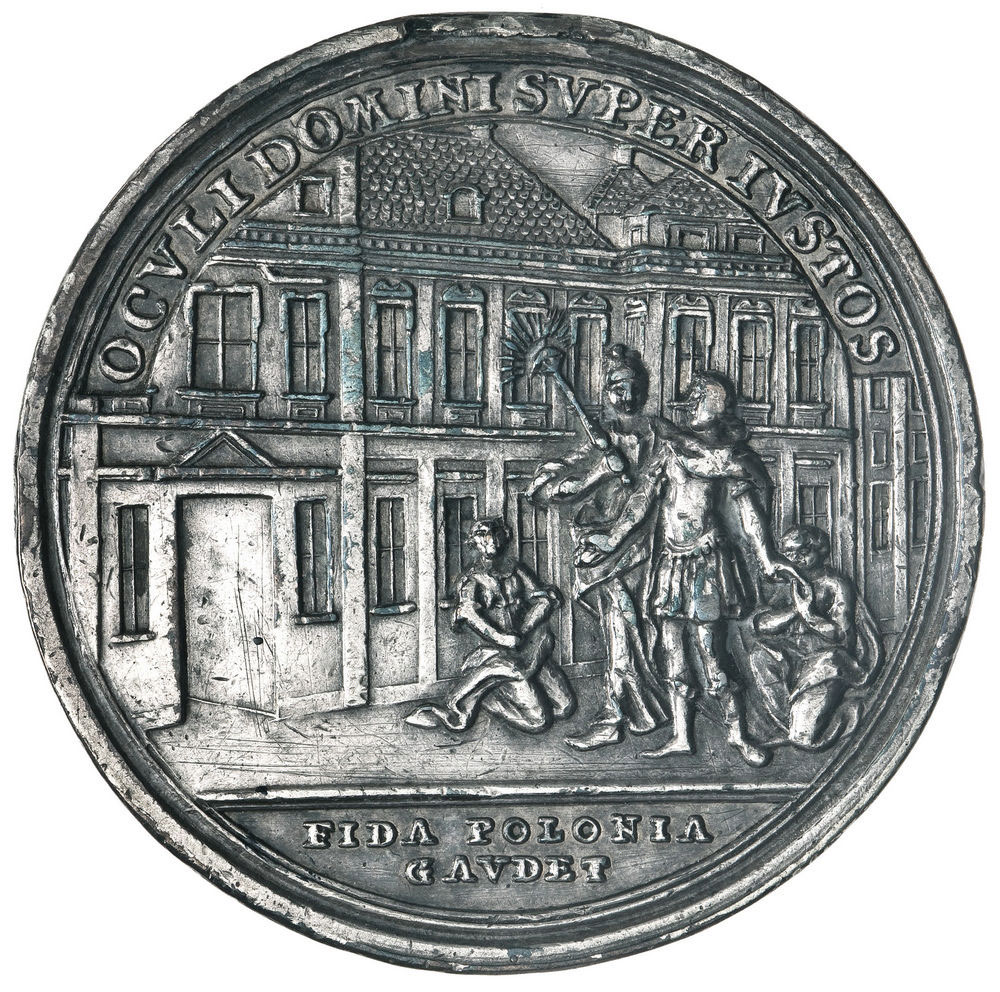
Na rewersie króla prowadzi Opatrzność, klęczą przy nim dwie postacie i przytoczone zostały słowa z Psalmu 34 (w. 16): „Oczy Pana [zwrócone są] ku sprawiedliwym”. Przedstawienie to uzupełnia także inny napis w języku łacińskim, według którego (z uwolnienia króla) cieszy się wierna Polska.
Według informacji opublikowanej w 1772 r. w „Wiadomościach Warszawskich” pokazana na rewersie postać całująca króla w rękę to Polska, a druga to Litwa „w postaci dziękującej Bogu, że raczył iej zachować Króla tak Kochanego” (za: „Wiadomości Warszawskie” 1772, nr 45, [s. 7–8]).
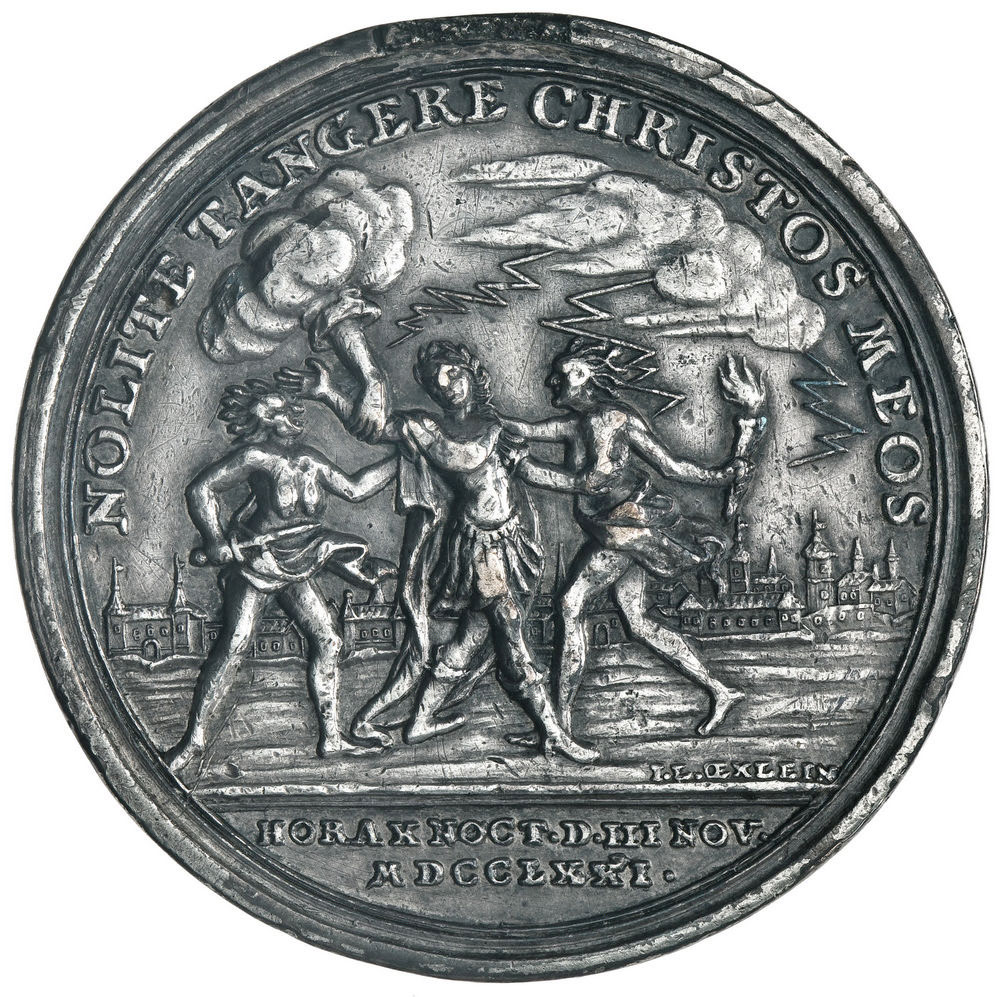
The medal commemorates the event that took place on 3 November 1771 in the centre of Warsaw, in Kapucyńska Street (today ul. Miodowa) and reverberated across Europe. A group of conspirators linked to the Confederation of Bar abducted the monarch, whom they regarded as the marionette of Russia. As related by Wiadomości Warszawskie three days later, between 9 and 10 pm, King Stanislaus Augustus was on his way back to the Royal Castle after visiting the Great Chamberlain of Lithuania. He was accompanied by only few guards. Between the palace of the Bishop of Kraków and residence of the Grand Hetman of the Crown, they were attacked by some thirty armed men. The king was forced out of the carriage, hit on the head with a sword, and shot at from a pistol at close range. The bullet missed him by a whisker, he just felt the heat. He also suffered bruises from multiple hits with the flat side of a sword and his coat was punctured with bullet holes and slashed, and stained with blood. The monarch was led away but in the ensuing confusion his attackers split and in the end only one remained with the king. Stanislaus Augustus managed to convince the man to set him free.
In the featured medal, the event is depicted as a crime against the anointed monarch. The obverse shows two Furies who try to kidnap the king but are stopped by the hand of God emerging from the clouds. Likewise the forces of nature, symbolized by thunderbolts, oppose this sacrilegious act of violence, the idea stated by the accompanying Latin inscription: “Do not touch my anointed ones” (Psalm 105:15). The reverse shows the king being led by Divine Providence and accompanied by two kneeling figures and a Latin inscription: “The eyes of the Lord are toward the righteous” (Psalm 34:16). Another Latin inscription refers to “faithful Poland” rejoicing in the monarch’s release. According to a mention in Wiadomości Warszawskie in 1772, the female figures on the medal’s reverse represent Poland, kissing the monarch’s hand, and Lithuania,“thanking God for saving the king so much beloved”.
❦
Autor nieznany, Medal malarza Bernardina Galliariego (1707–1794) w związku z wykonaniem dekoracji w kościele św. Jadwigi w Berlinie w 1773
Miedź, bity, śred. 42 mm, waga 30,0724 g. nr inw. MNWr X-12428
Na awersie tego medalu pokazany został Kościół św. Jadwigi w Berlinie, nad którym siedzi na chmurze Religia. Trzy postacie stojące obok budynku to, według opisu takiego medalu zamieszczonego w publikacji z 1783 r., personifikacje malarstwa, rzeźby i architektury. Jedna z nich trzyma medalion z portretem Bernardina Galliariego.
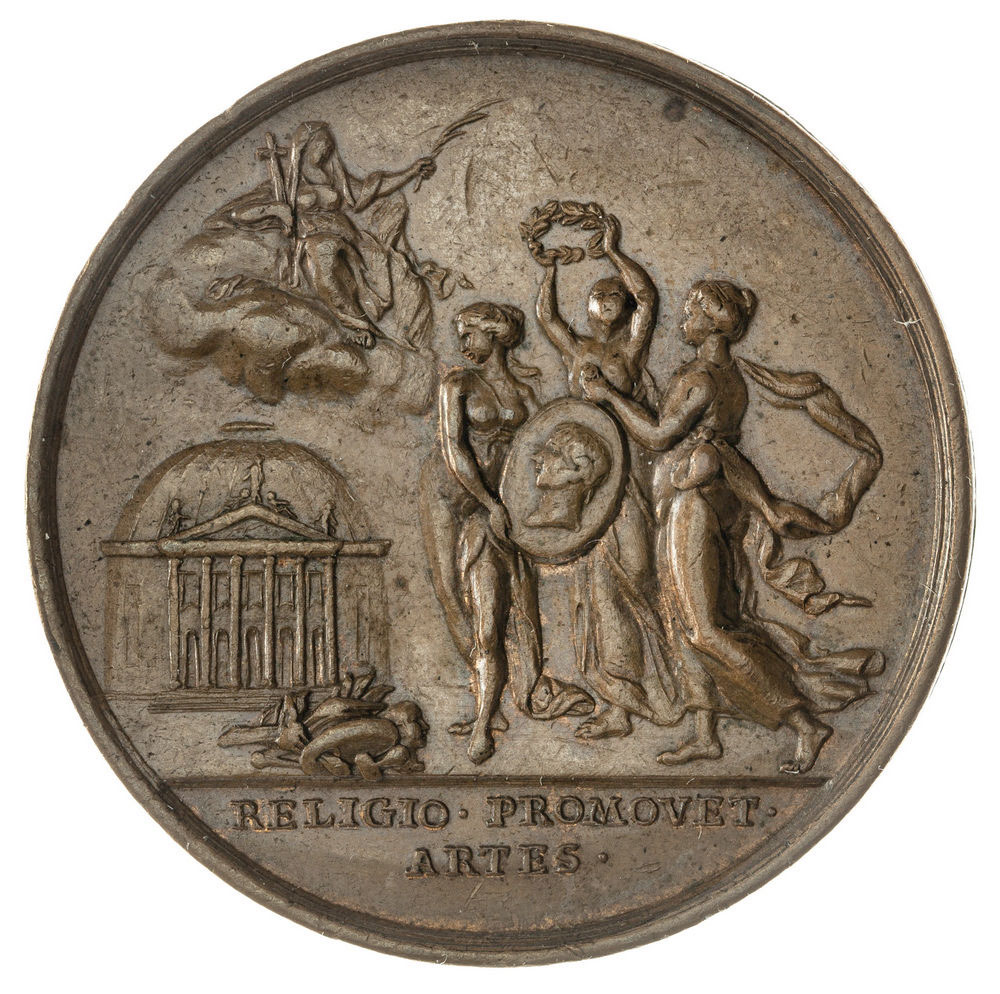
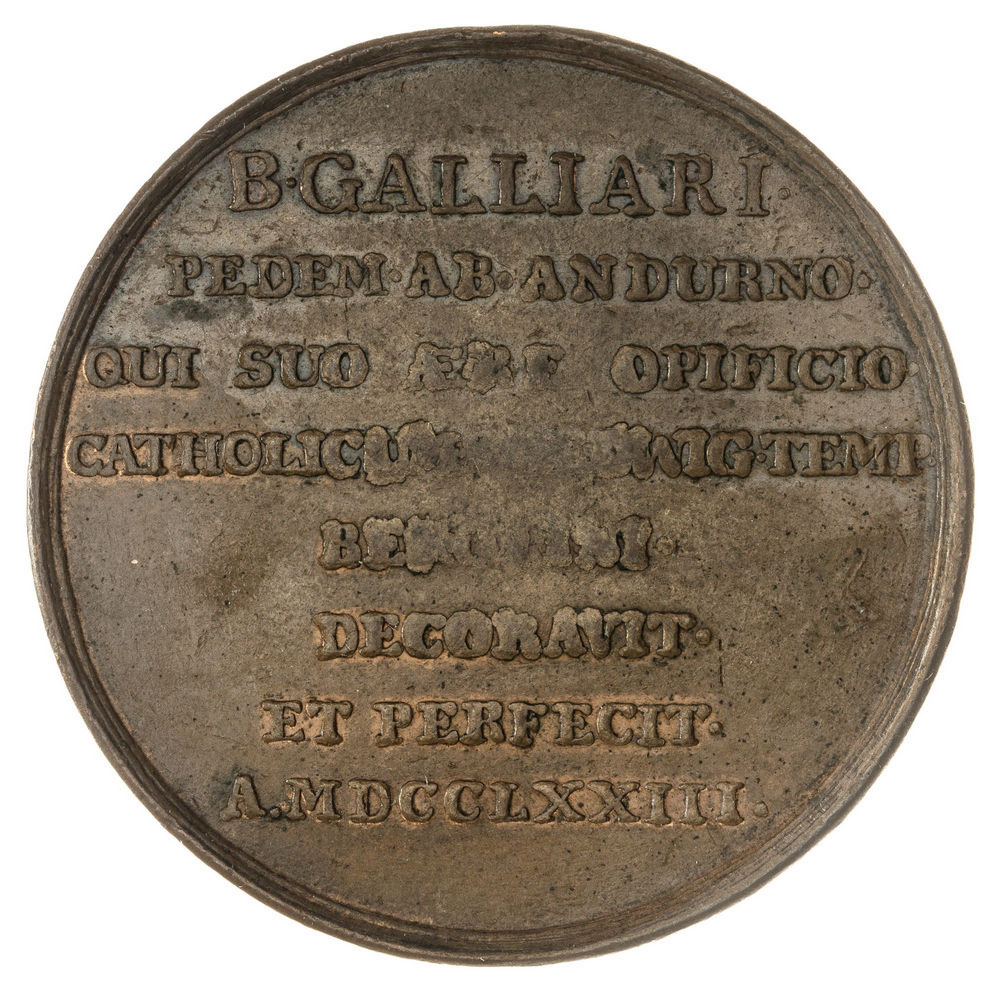
The medal’s obverse features St Hedwig’s Church in Berlin watched from the above by the personification of Religion seated on a cloud. According to the description of the like medal published in 1783, the three figures standing next to the building are personifications of Painting, Sculpture, and Architecture. One of them holds a medallion with the portrait of Bernardino Galliari.
❦
Nicolas-Marie Gatteaux, Medal „dobrego sędziwego człowieka” ze święta „dobrych ludzi” w Canon, od ok. 1775
Miedź, bity, patynowany, śred. 42 mm, waga 31,8465 g, nr inw. MNWr X-15516
Święto „dobrych ludzi” (Fête des Bonnes-Gens) zostało ustanowione w Canon w Normandii 10 lutego 1775 r. przez właściciela dóbr Canon adwokata Jean-Bapiste’a Elie de Beaumonta i jego żonę pisarkę Anne-Louise. Podczas niego wręczano mieszkańcom tych dóbr nagrody: „dobrej dziewczyny”, „dobrej matki”, „dobrego sędziwego człowieka”, „dobrego szefa rodziny”. Skład komisji przyznającej te wyróżnienia oraz wymogi, które powinni spełniać kandydaci do nagród zostały dokładnie określone i opublikowane w książce Fêtes des Bonnes-Gens de Canon et des Rosieres de Briquebec, wydanej w 1777 r.
Święto to zostało przedstawione na obrazie Pierre’a Alexandre’a Willego Święto Dobrych Ludzi, czyli Cnota Nagrodzona (La fête des bonnes gens ou la récompense de la Sagesse et de la Vertu, 1776).
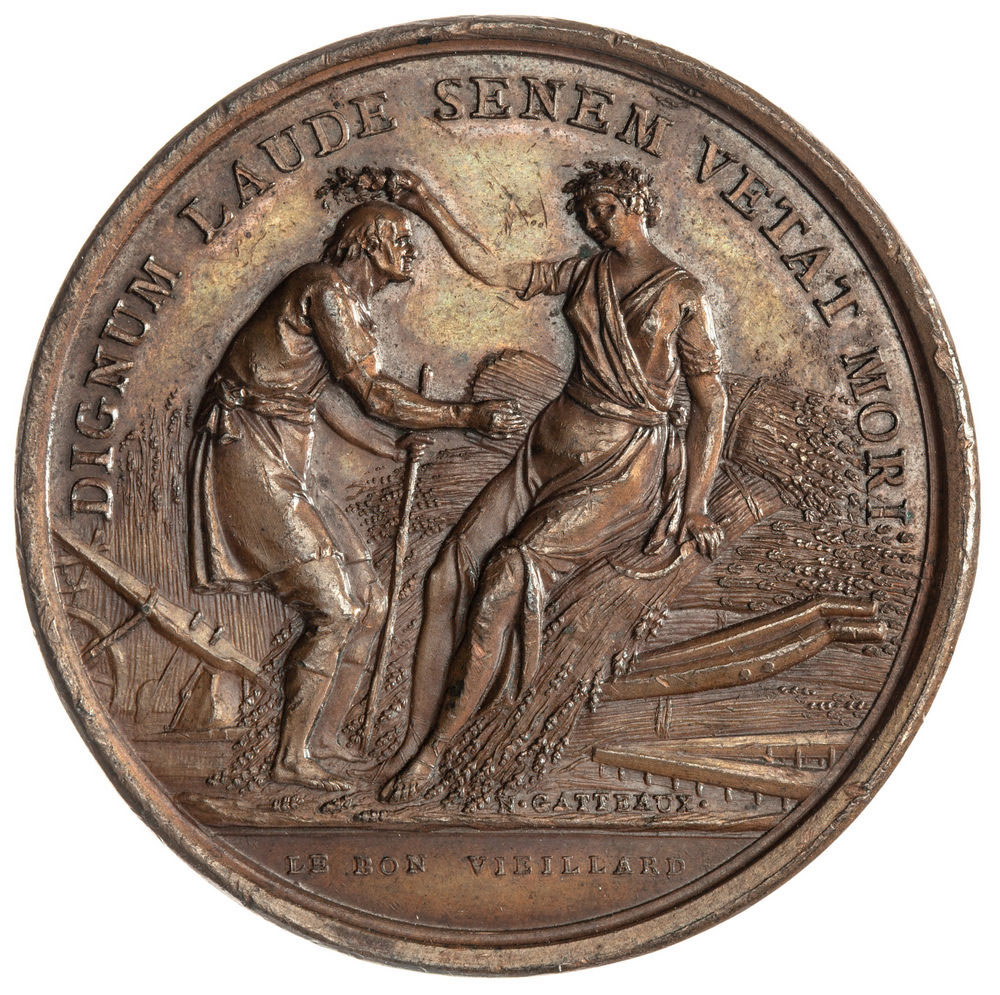
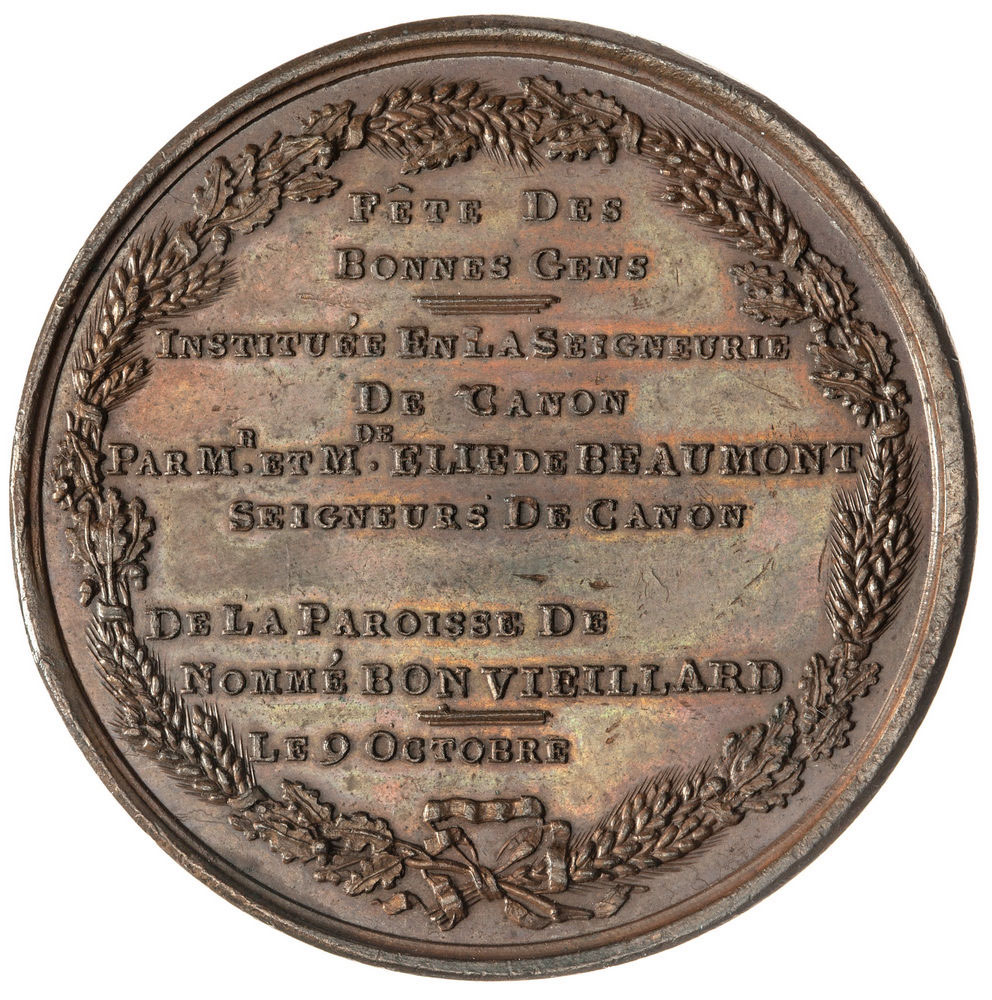
The Good People Festival (Fête des Bonnes-Gens) was established at Canon, Normandy, in 1775 by the estate’s owner, lawyer Jean-Bapiste Elie de Beaumont, and his wife, writer Anne-Louise. During the festival, local people were presented with awards honouring their virtuous performance of model social roles: “good girl”, “good mother”, “good old man”, “good head of the family”. The rules concerning the commission awarding the titles and the criteria that the candidates had to fulfil were precisely defined and published in the book entitled Fêtes des Bonnes-Gens de Canon et des Rosieres de Briquebec (1777).
The festival was depicted in the eponymous painting by Pierre Alexandre Wille (The Festival of Good People, or the Reward for Virtue, 1776).
❦
Theodor Victor van Berckel, Medal nagrodowy akademii sztuk pięknych w Niderlandach Austriackich, 1778
Cyna, bity, patynowany, śred. 47 mm, waga 57,8333 g, nr inw. MNWr X-11096
Na awersie medalu znajduje się popiersie protektora akademii, namiestnika Niderlandów Austriackich księcia Karola Lotaryńskiego.
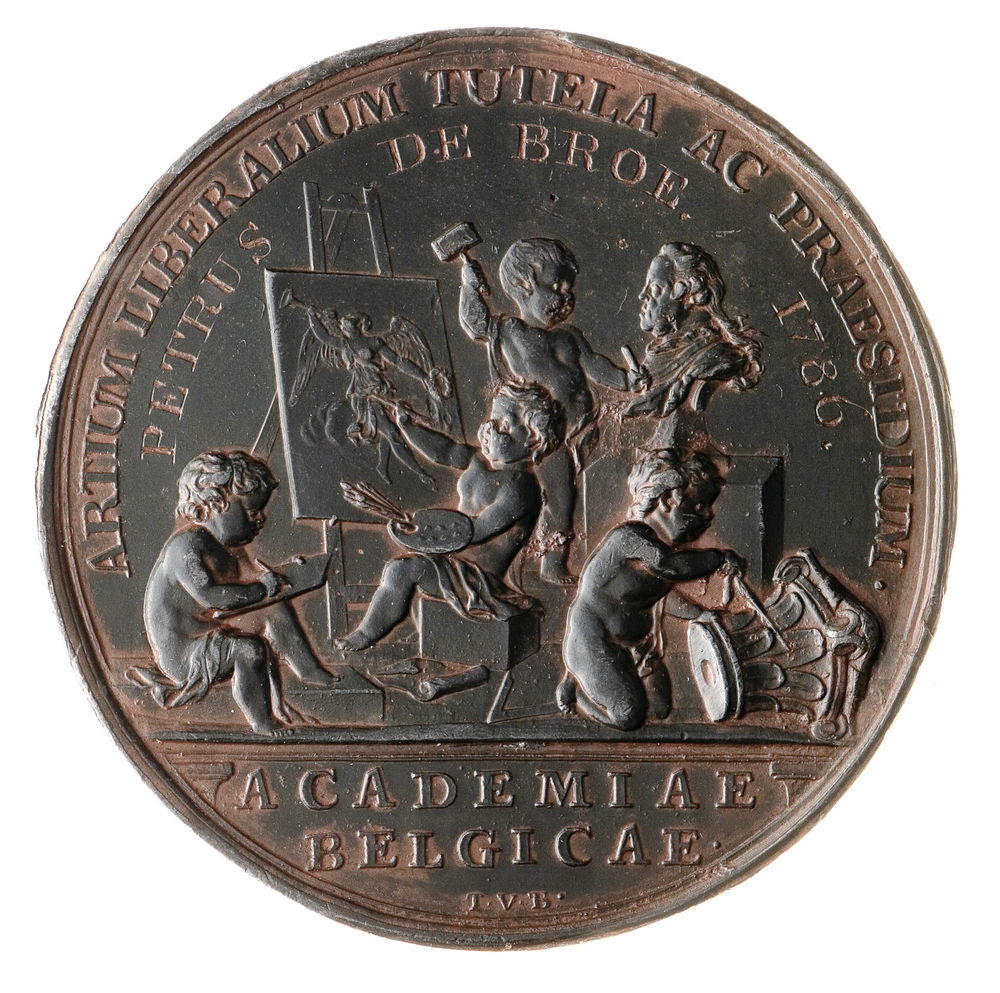
Na rewersie umieszczono wtórnie napis, który informuje, że egzemplarz medalu ze zbioru Muzeum Narodowego we Wrocławiu był nagrodą dla Petrusa de Broe, przyznaną mu w 1786 r. De Broe pochodził z Gandawy i uczęszczał wtedy do pierwszej klasy Królewskiej Akademii Rysunku, Malarstwa i Architektury.
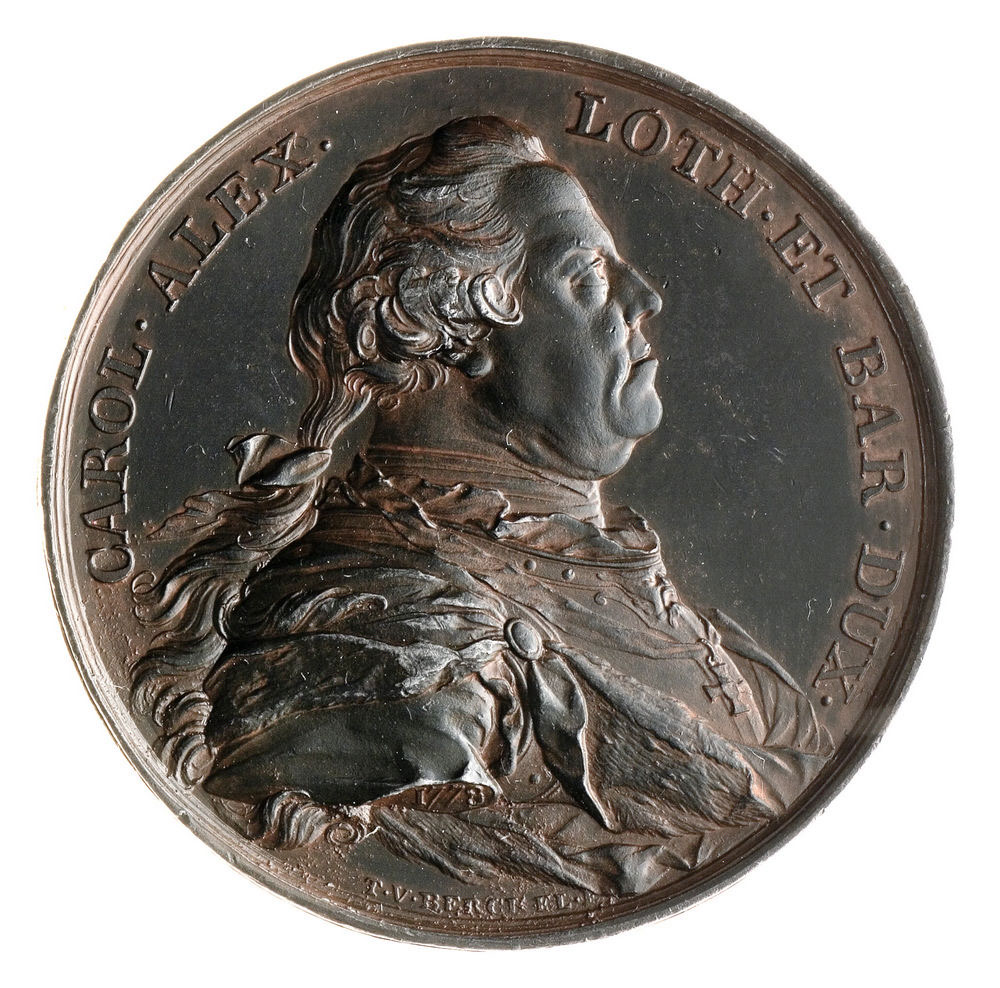
The obverse features the bust of patron of the academy, Governor of the Austrian Netherlands Duke Charles of Lorraine.
The reverse features an inscription, engraved at a later date, stating that this specific medal was awarded to one Petrus de Broe in 1786. De Broe was a native of Ghent and at the time was a first-year student at the Royal Academy of Drawing, Painting, and Architecture.
❦
Johann Philipp Holzhaeusser, Medal dla dowódcy artylerii Alojzego Fryderyka Brühla (1739–1793) z okazji narodzin syna Jana Maurycego, 1781
Miedź, bity, śred. 43,5 mm, waga 35,3706 g, nr inw. MNWr X-5180
Synowi Alojzego Fryderyka Brühla Janowi Maurycemu już w jego wieku niemowlęcym król Stanisław August Poniatowski nadał stopień porucznika. Na awersie medalu umieszczona została scena ukazująca to nadanie. Według informacji zawartej w „Gazecie Warszawskiej” z 1781 r. przed siedzącym na tronie królem Stanisławem Augustem Poniatowskim stoi Mars. Patent porucznika, który symbolizuje trzymana przez króla szarfa porucznikowska, według tej samej notatki prasowej został wręczony dziecku na prośbę Korpusu Artylerii Koronnej oraz w związku z zasługami ojca Jana Maurycego, dowódcy tego korpusu, o czym informuje także inskrypcja na medalu.
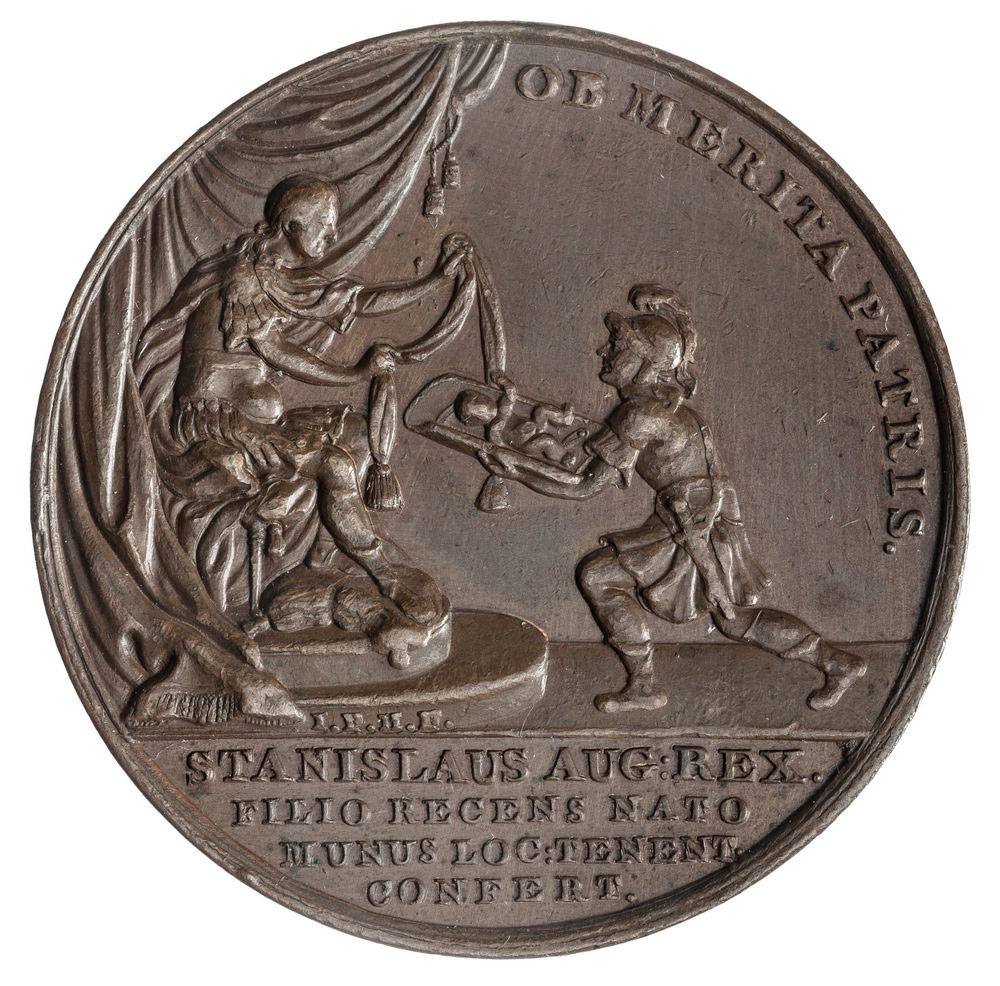
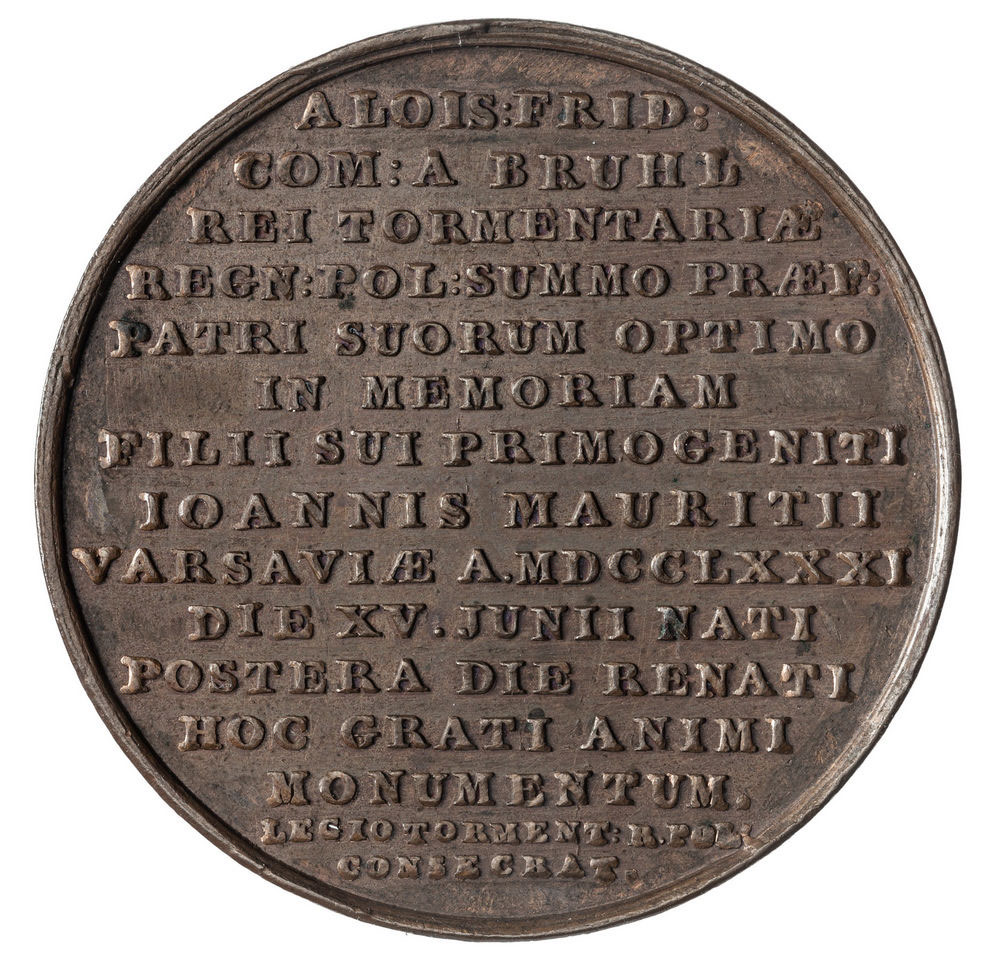
Hans Moritz von Brühl, son of artillery general Alois Friedrich von Brühl, was still an infant when King of Poland Stanislaus Augustus Poniatowski made him a lieutenant. The obverse of the medal features the scene representing the act of commissioning. According to a note published in Gazeta Warszawska in1781, it shows the god of war Mars standing in front of the enthroned king holding the lieutenant’s ribbon. According to the same note, the king had acted in response to the entreaty of the Corpse of Crown Artillery commanded by the boy’s father and in recognition of the latter’s service, as indicated by the inscription featured on the medal itself.
Wybrane medale
❦
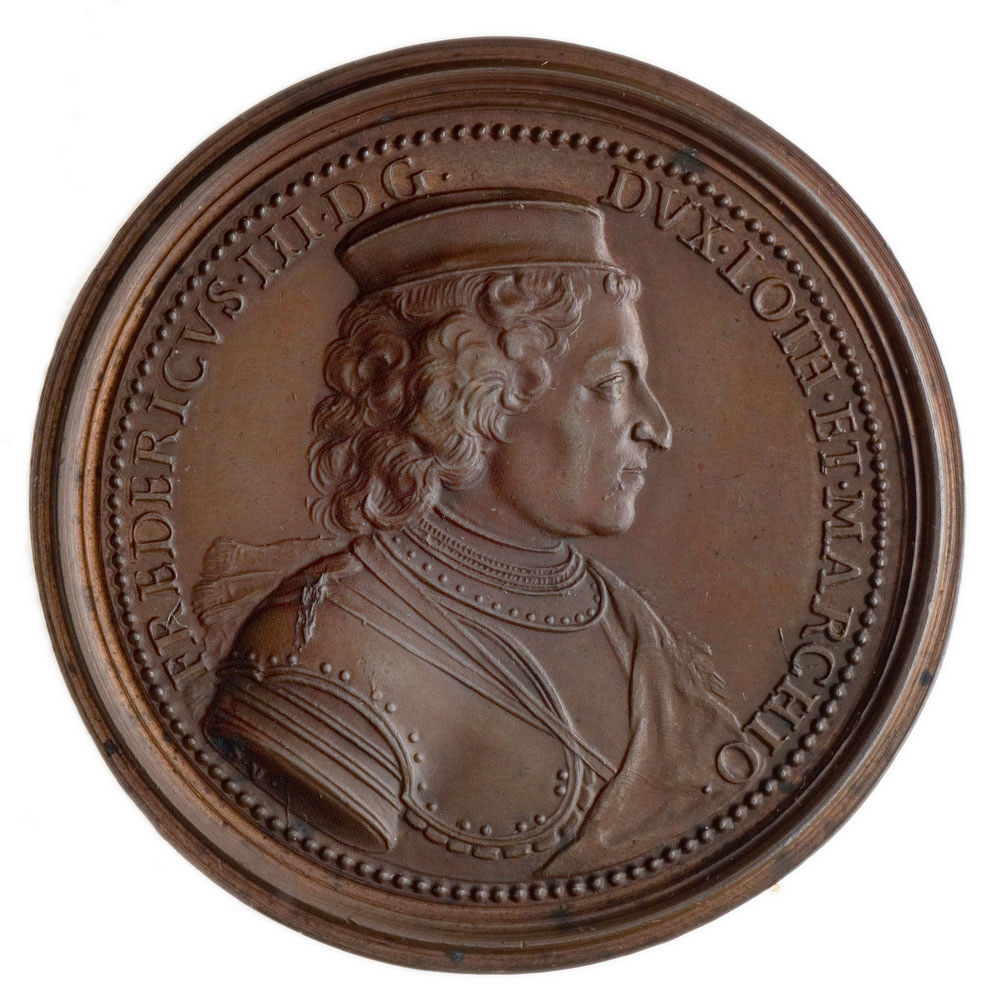
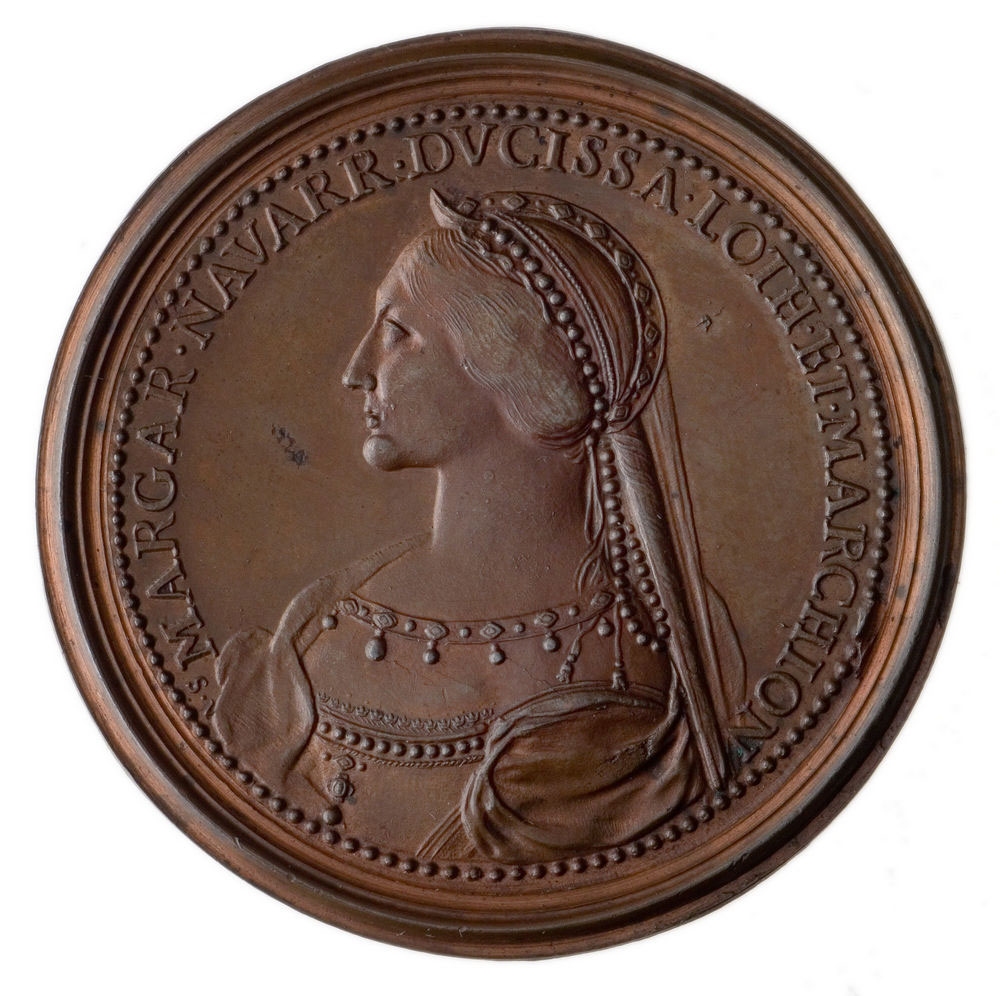
Ferdinand de Saint Urbain lub Claude Augustin de Saint Urbain lub Marie Anne Vaultrin, Medal księcia Lotaryngii Fryderyka III Châtenois (zm. 1303) i jego żony Małgorzaty z serii dotyczącej władców lotaryńskich i ich genealogii, XVIII w.
Miedź, bity, śred. 47 mm, waga 71,7870 g, nr inw. MNWr X-11087
❦
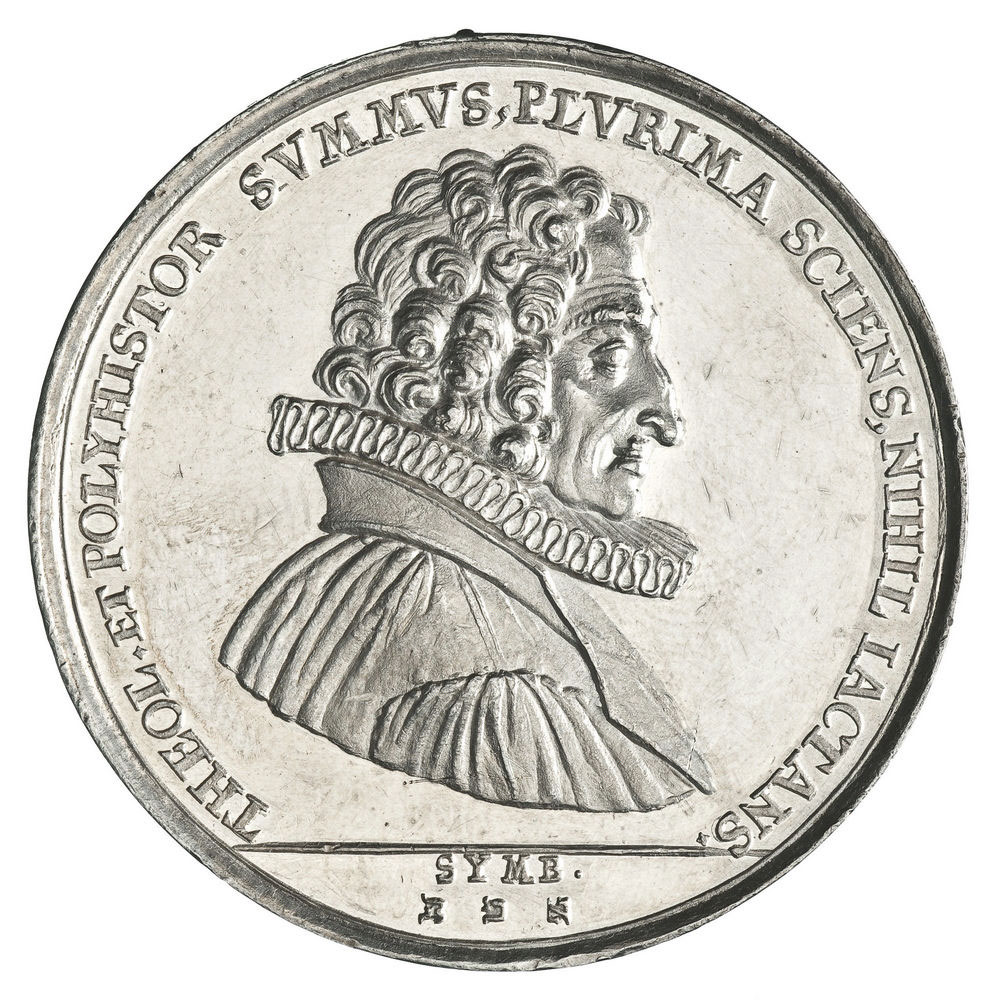
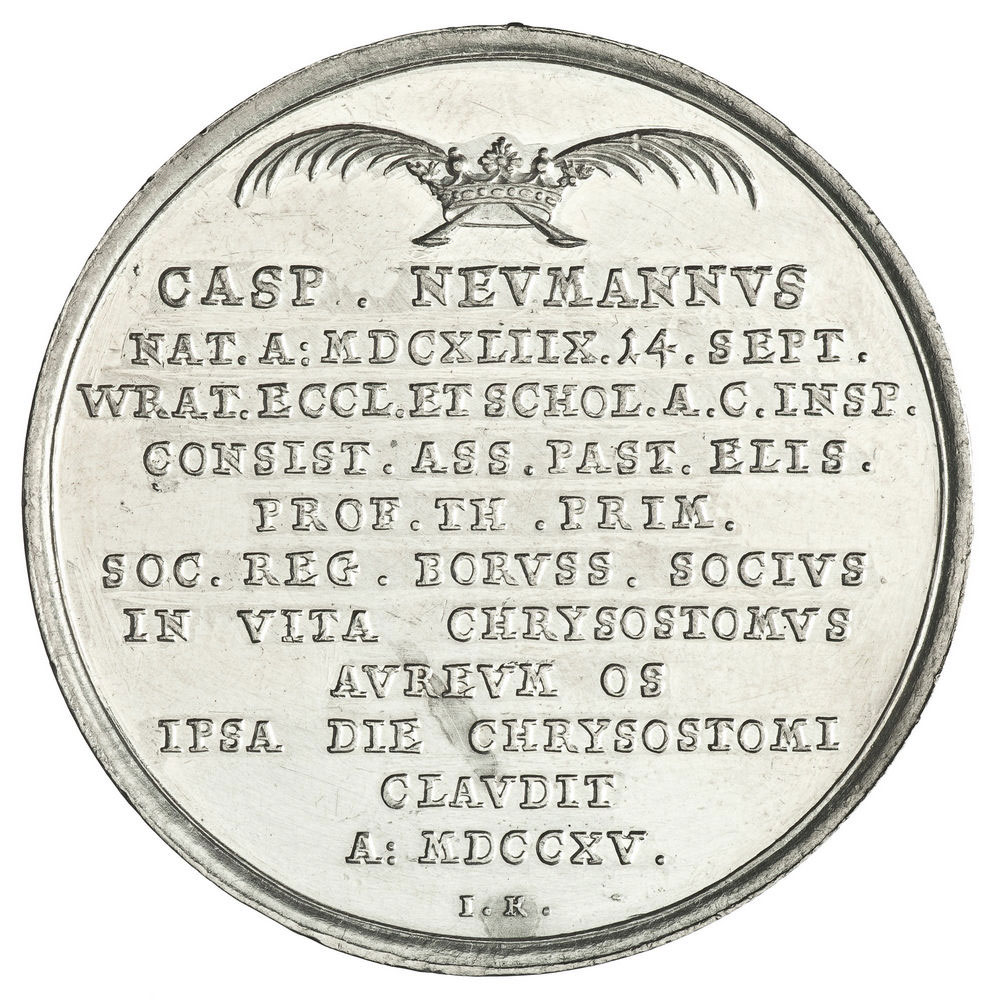
Johann Kittel. Medal upamiętniający śmierć teologa Caspra Neumanna (1648–1715), 1715
Srebro, bity, śred. 38 mm, waga 15,2701 g, nr inw. MNWr X-18949
❦
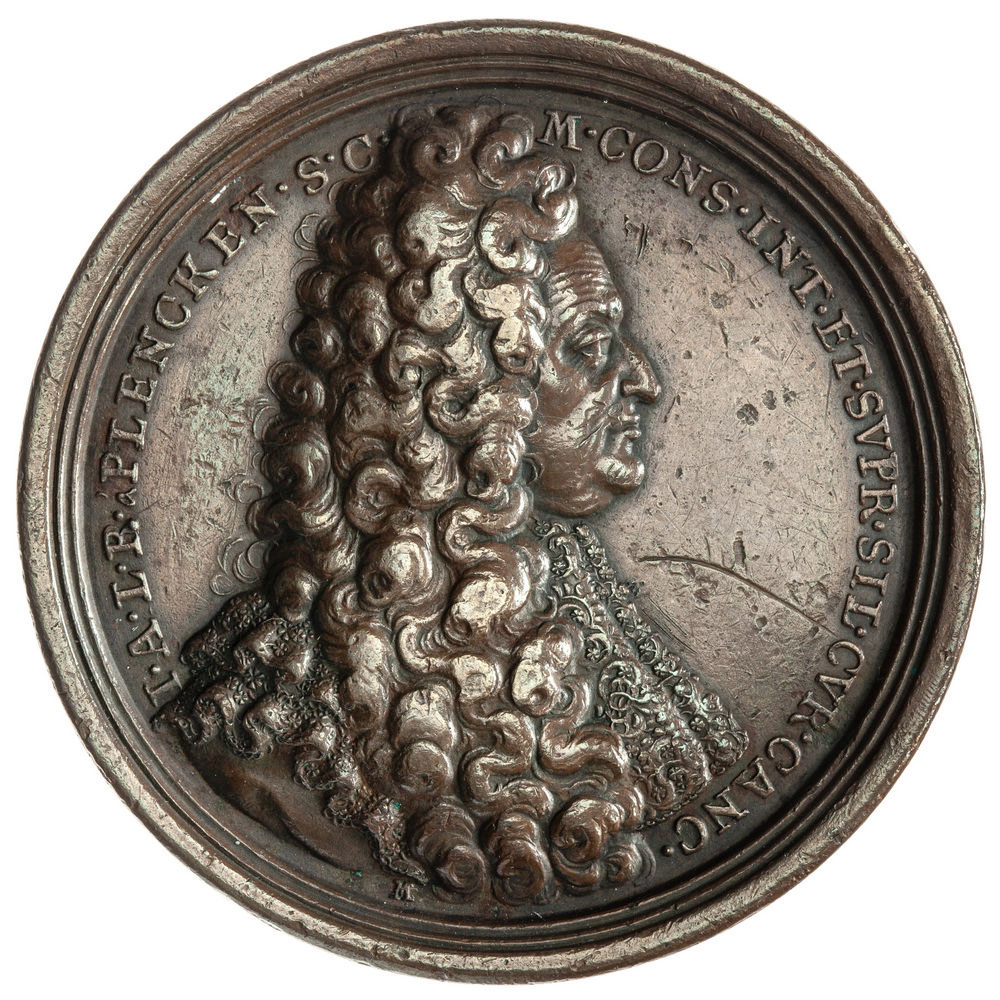
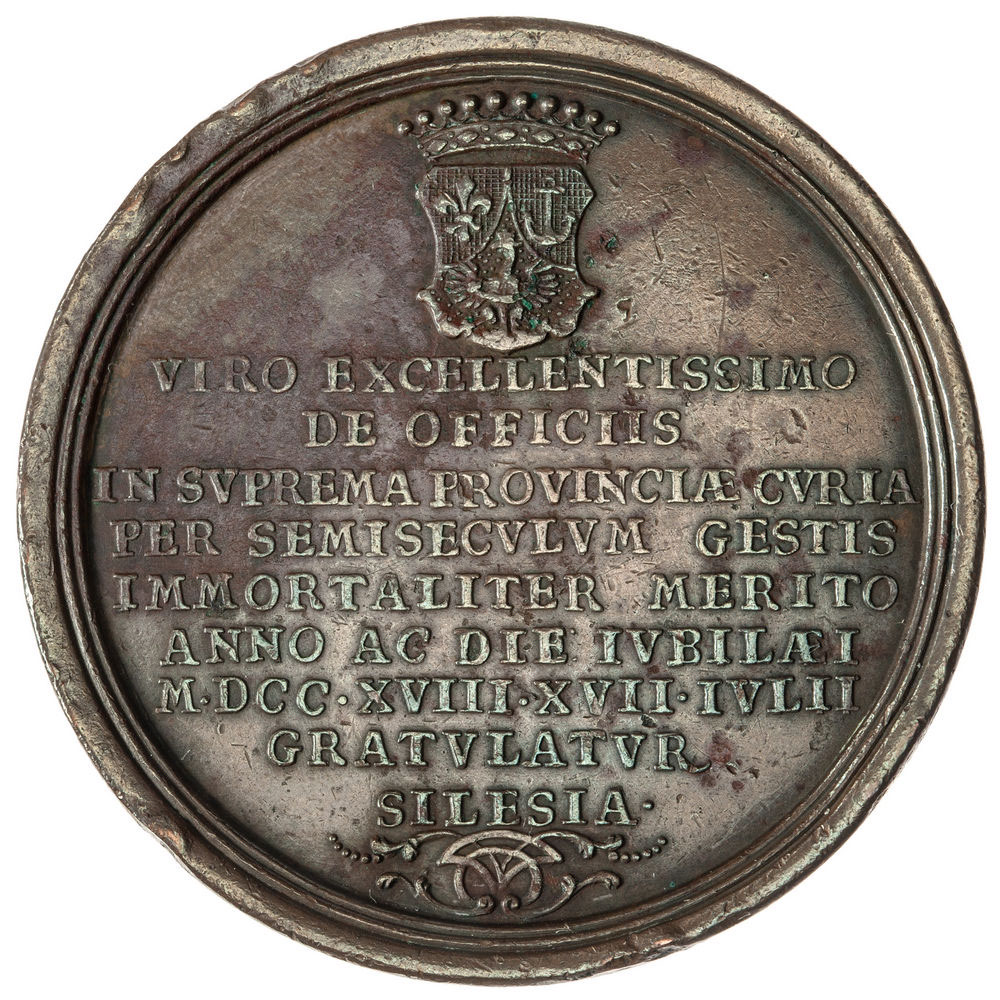
M., Medal Johanna Adriana von Plencken z okazji obchodów 50-lecia pracy na stanowisku urzędnika we Wrocławiu 17 lipca 1718 r., 1718
Miedź, bity, śred. 48,7 mm, waga 43,9731 g, nr inw. MNWr X-18923
❦
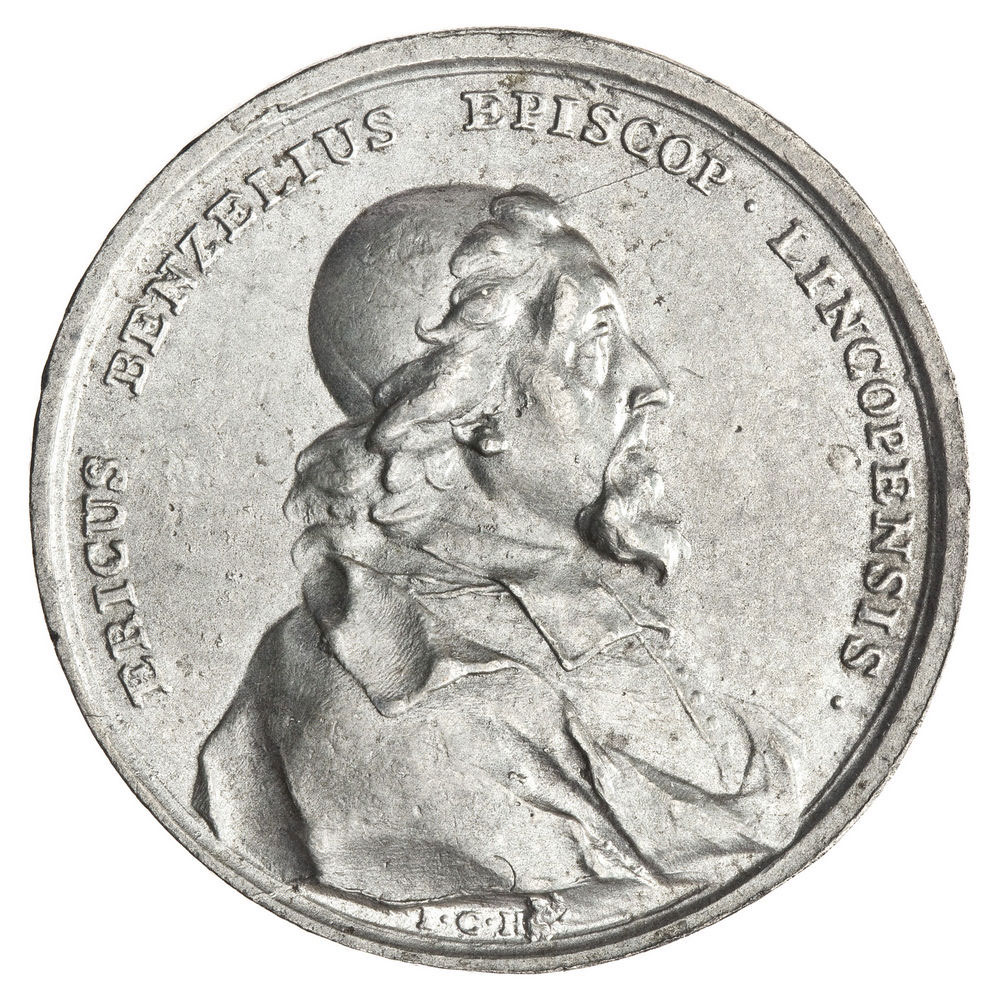
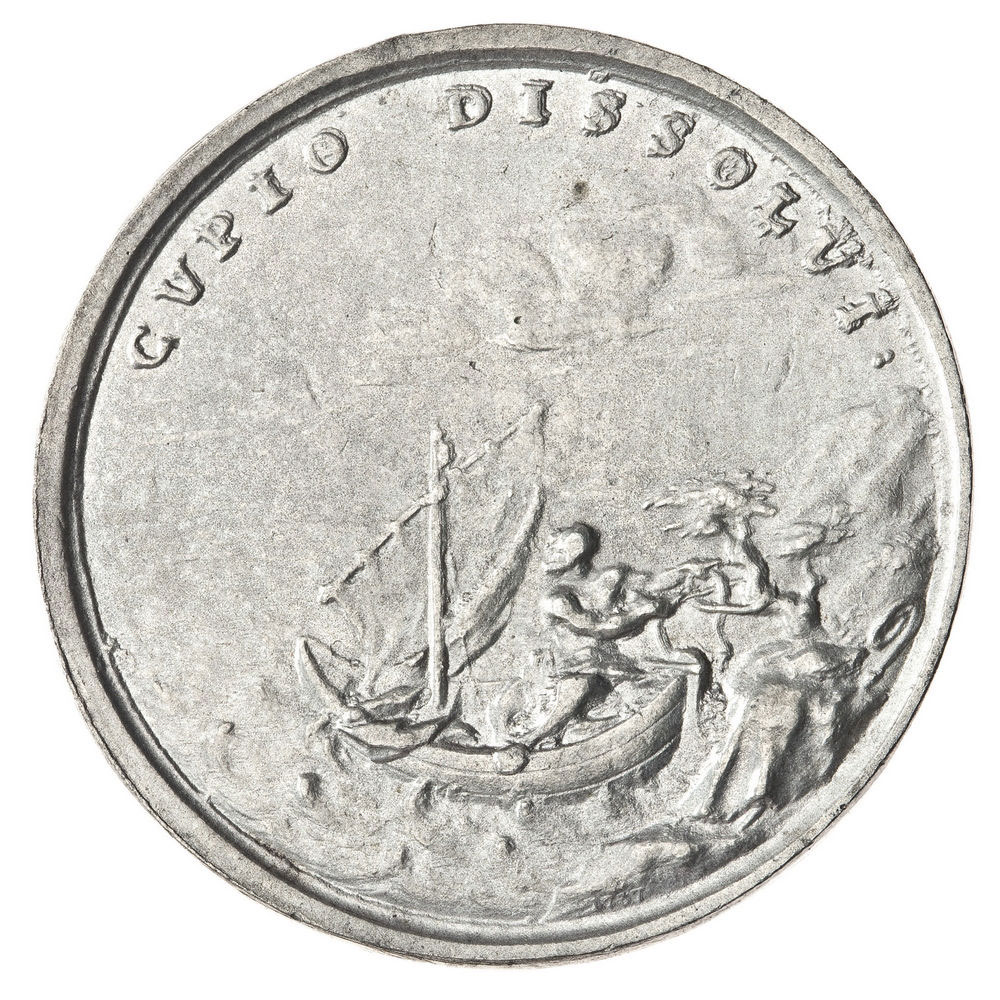
Johann Carl Hedlinger, Medal biskupa Linköping Erica Benzeliusa młodszego (1675–1743), od 1737
Cyna, bity, śred. 43 mm, waga 28,6743 g, nr inw. MNWr X-12262
❦
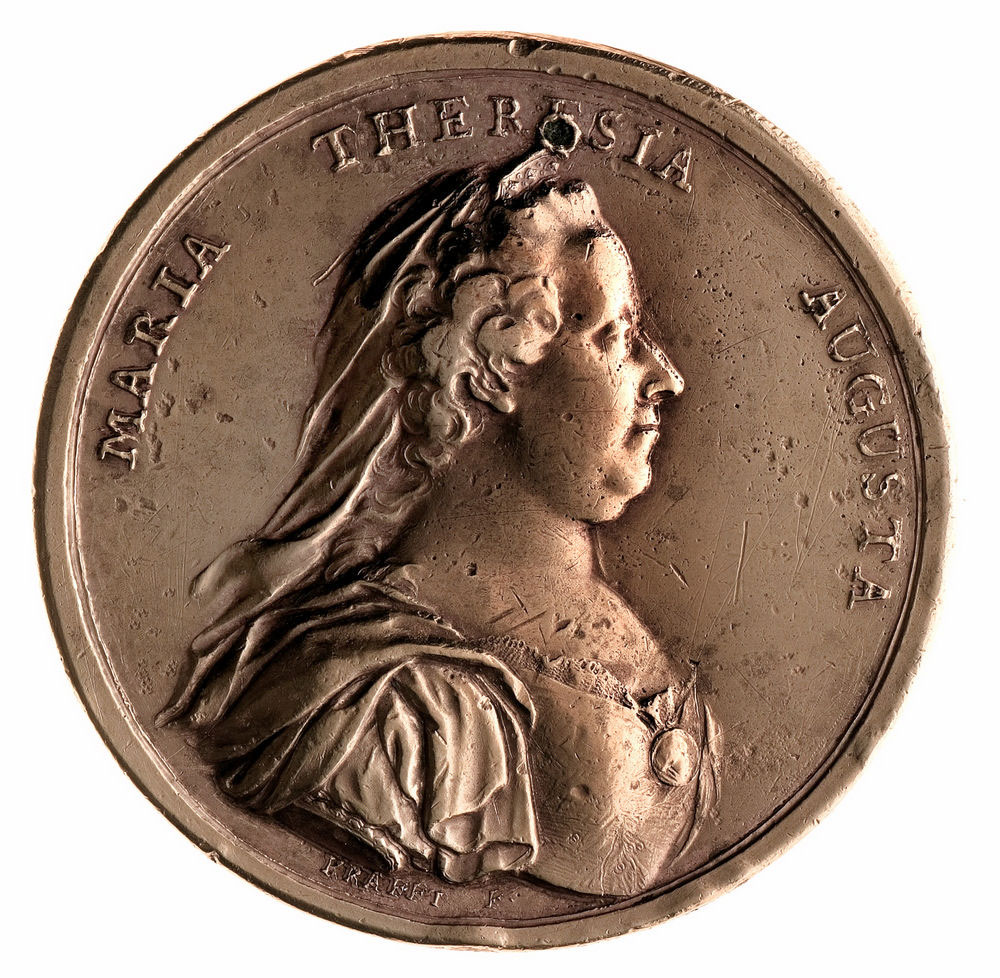
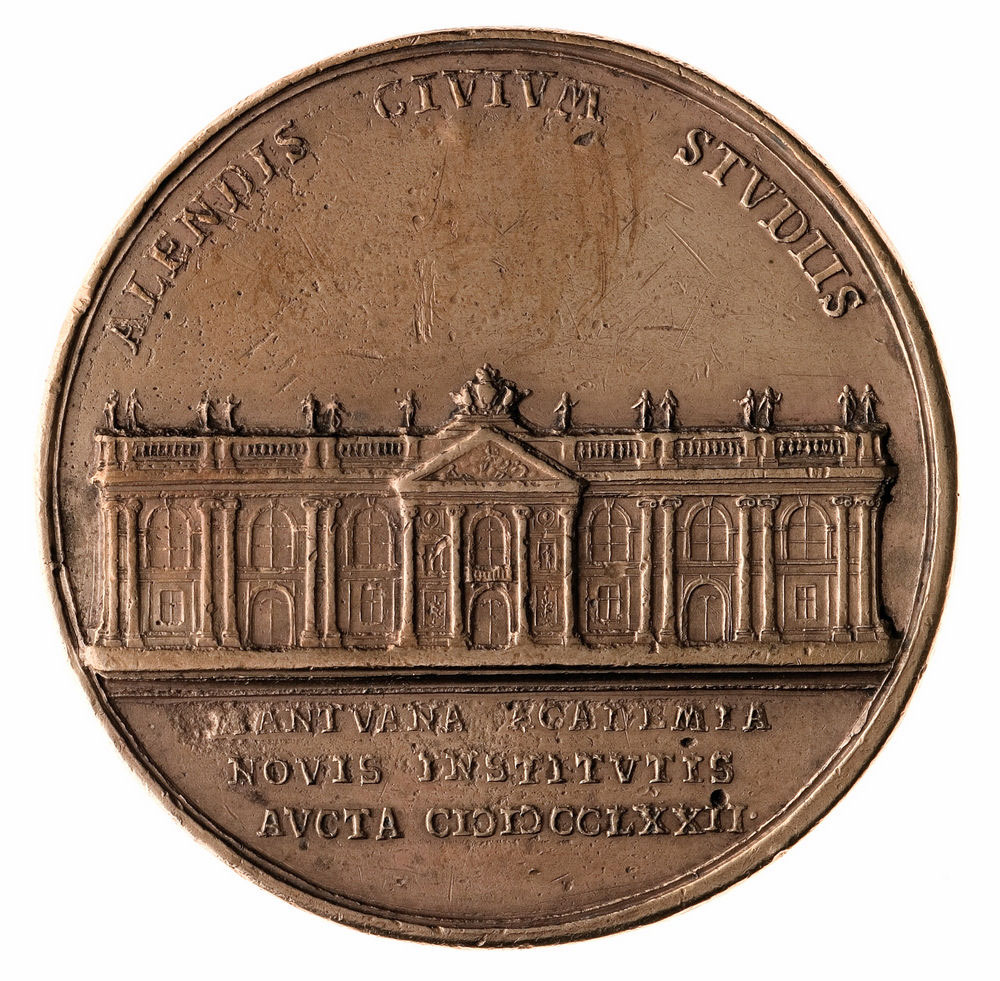
Johann Martin Krafft, Medal z okazji wybudowania budynku Teatro Scientifico przy Królewskiej Akademii Nauki i Literatury w Mantui w 1772 r., 1772
Brąz, bity, śred. 48 mm, waga 48,6484 g, nr inw. MNWr X-11903
❦
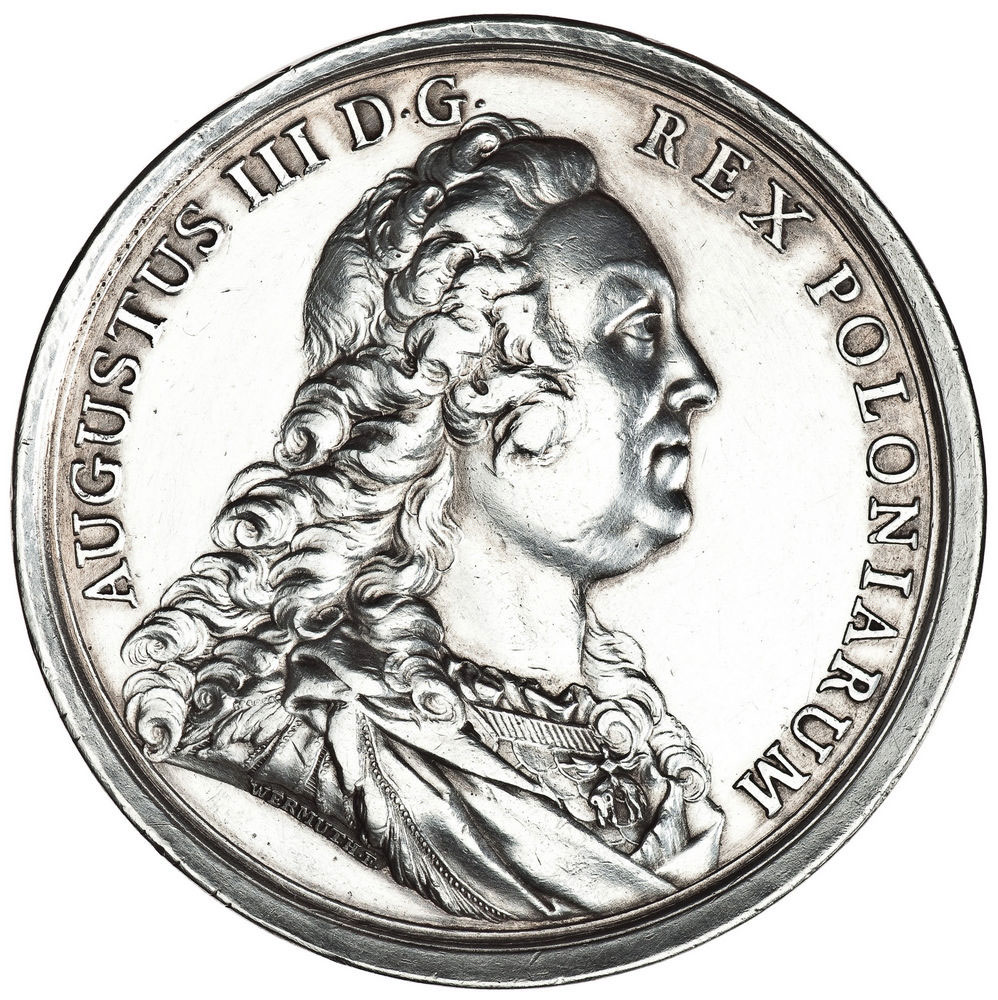
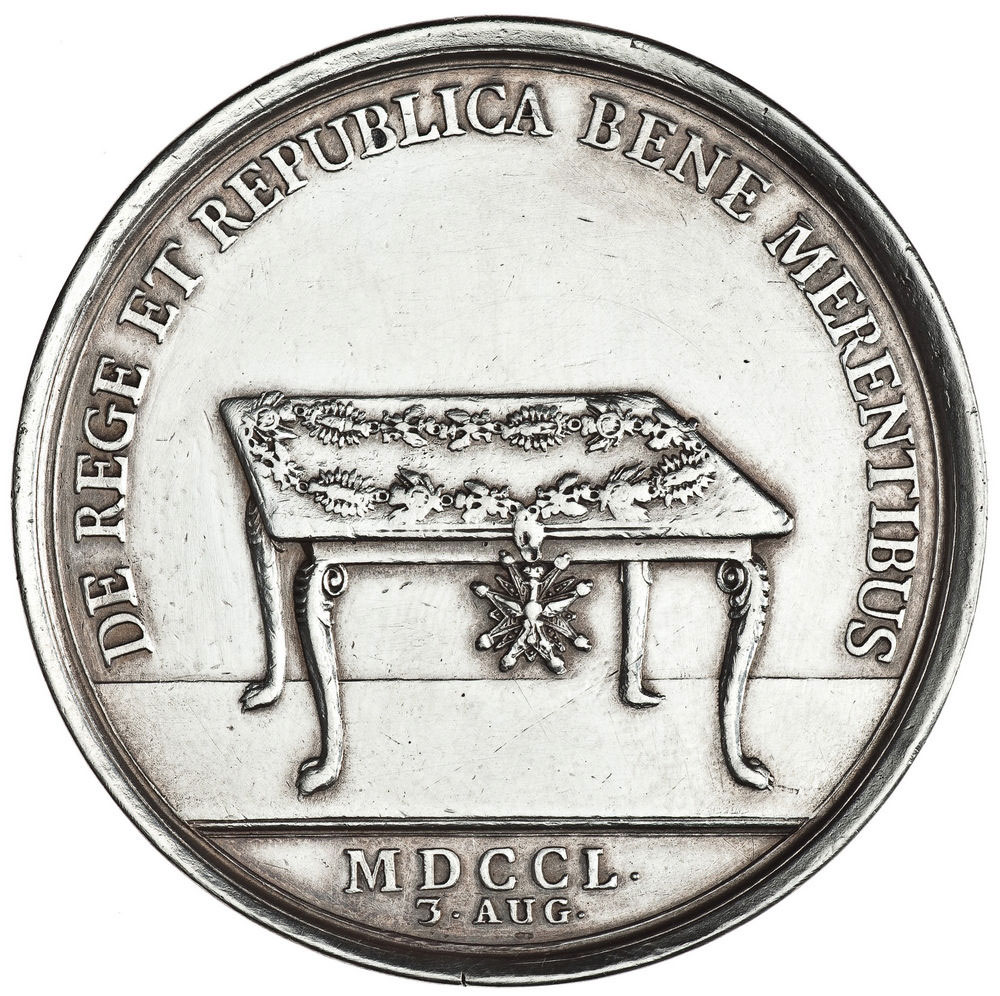
Christian Sigmund Wermuth, Medal nagrodowy Orderu Orła Białego, 1750
Srebro, bity, śred. 52,9 mm, waga 57,8938 g, nr inw. MNWr X-22400
❦
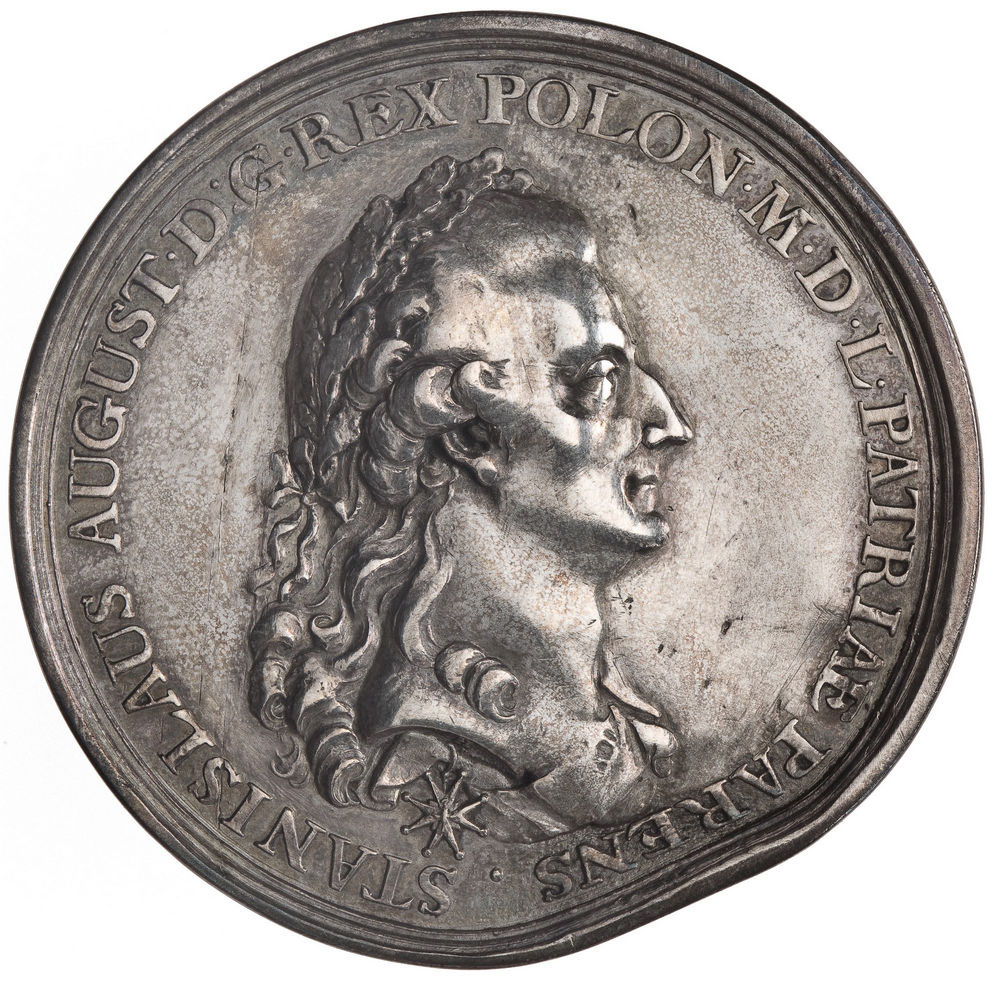
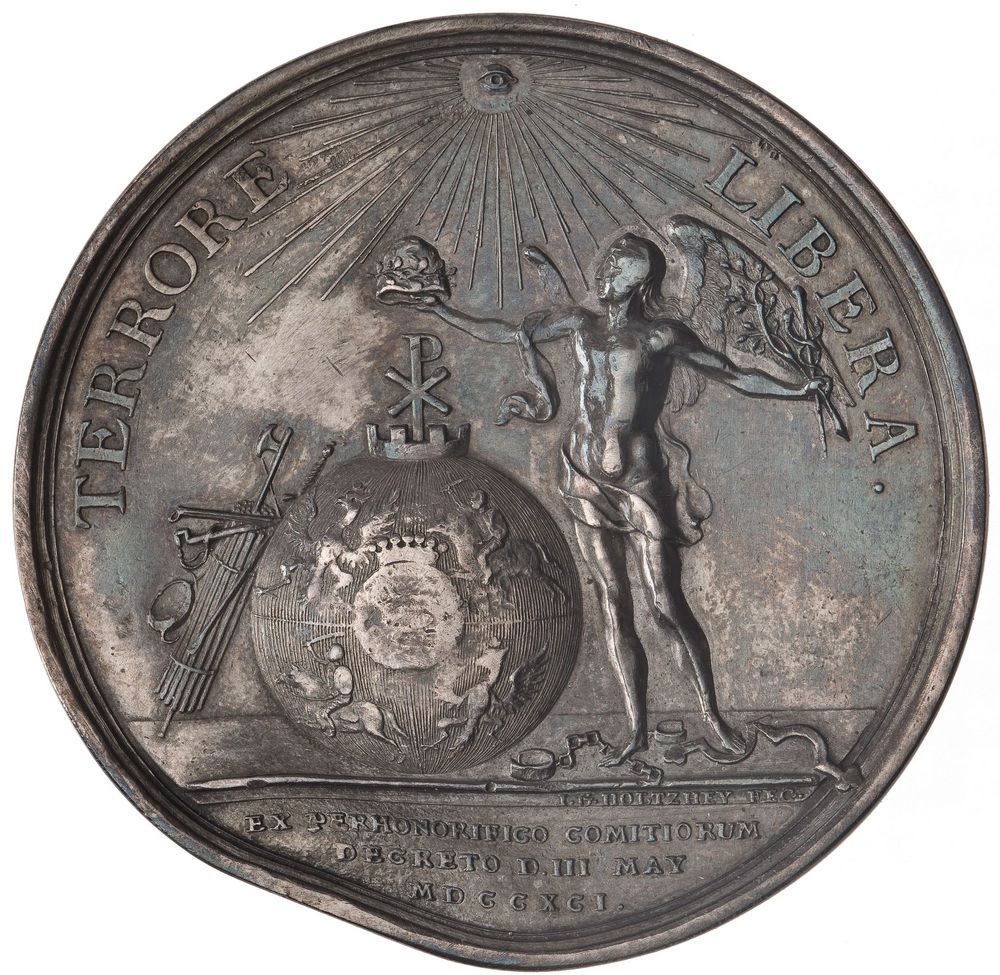
Johann Georg Holtzhey, Medal upamiętniający uchwalenie Konstytucji 3 Maja, 1791
Srebro, bity, śred. 44,8 mm, waga 25,1425 g, nr inw. MNWr X-9302
❦
Autor nieznany, Medal malarza Bernardina Galliariego (1707–1794) w związku z wykonaniem dekoracji w kościele św. Jadwigi w Berlinie w 1773
Miedź, bity, śred. 42 mm, waga 30,0724 g, nr inw. MNWr X-12428
❦
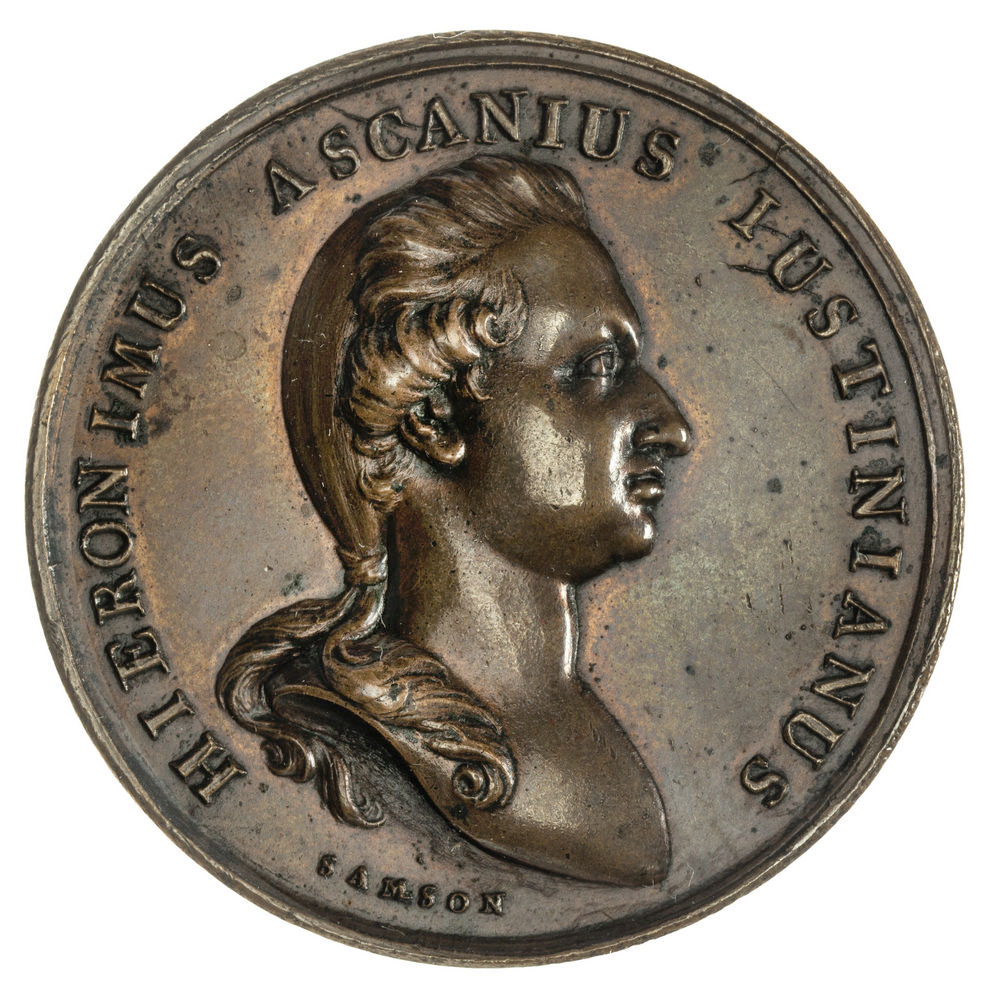
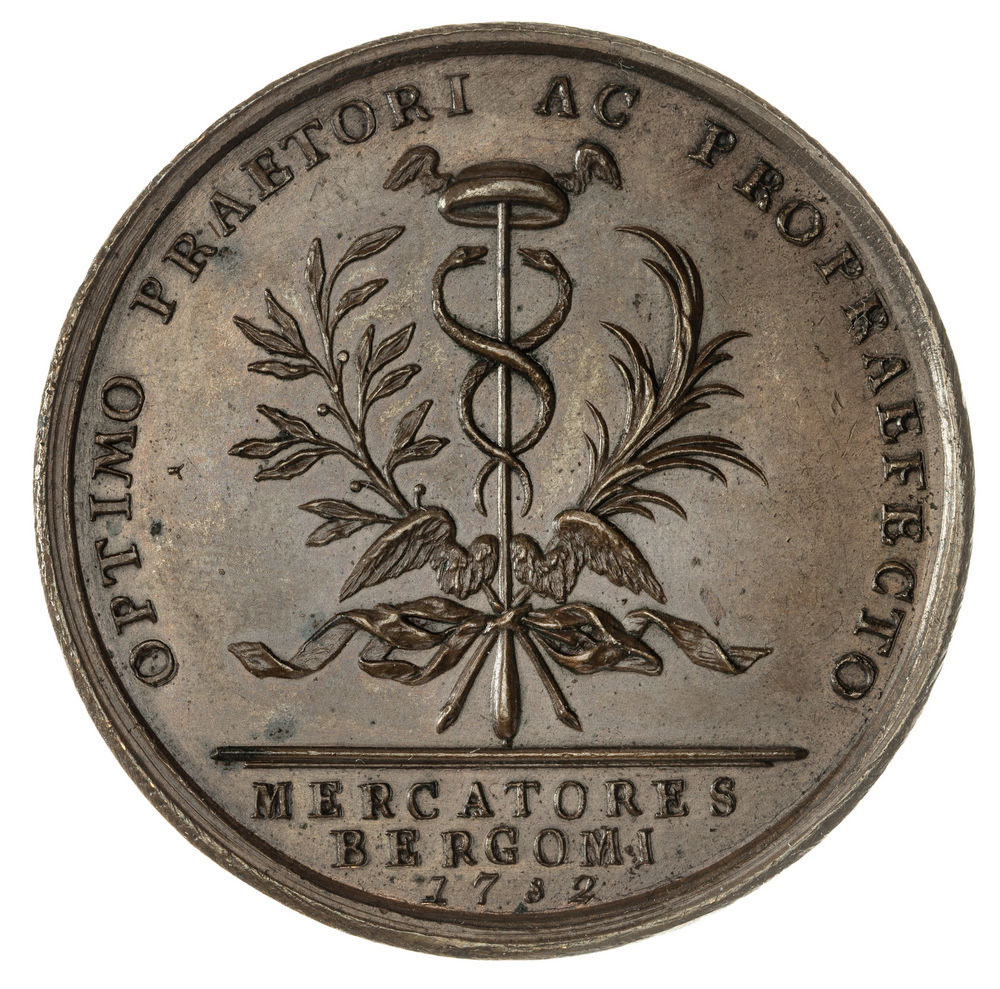
Samson, Medal polityka Girolama Ascania Giustinianiego (1721–1791), 1782
Miedź, bity, śred. 45 mm, waga 33,2853 g, nr inw. MNWr X-12467
❦
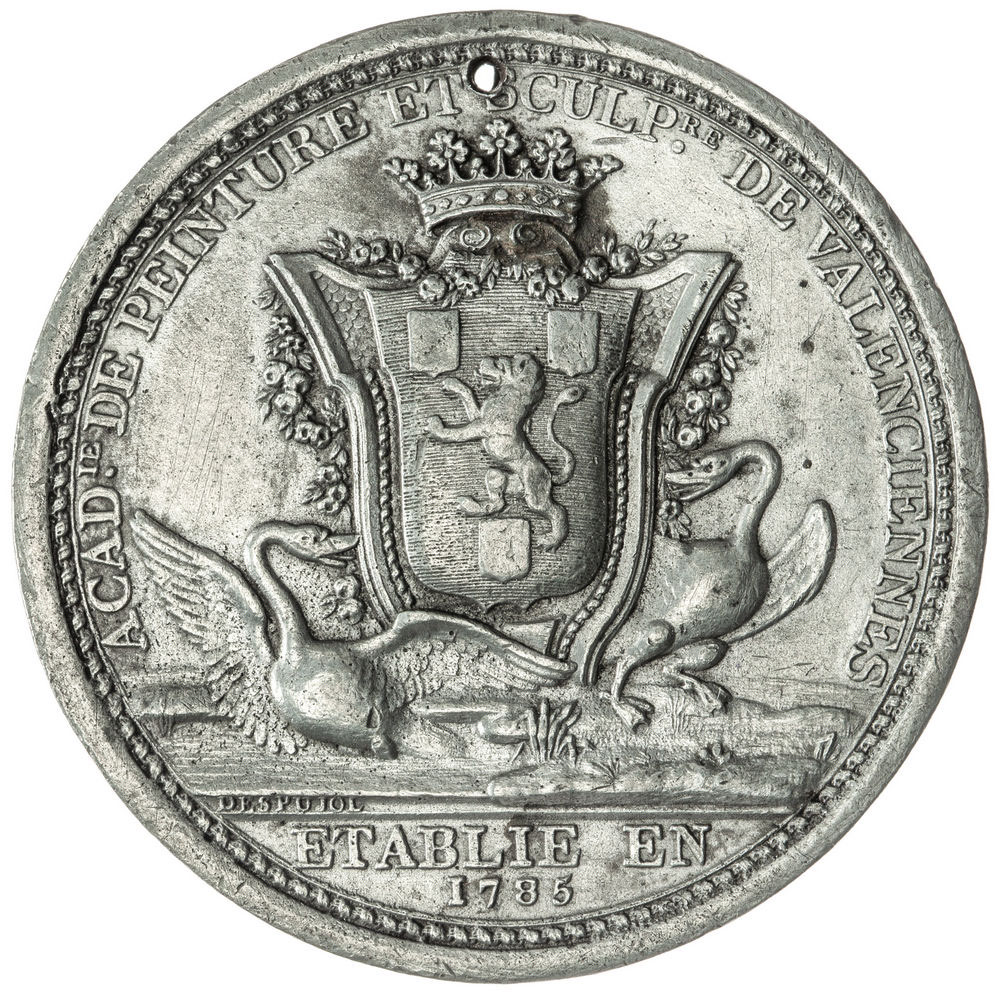
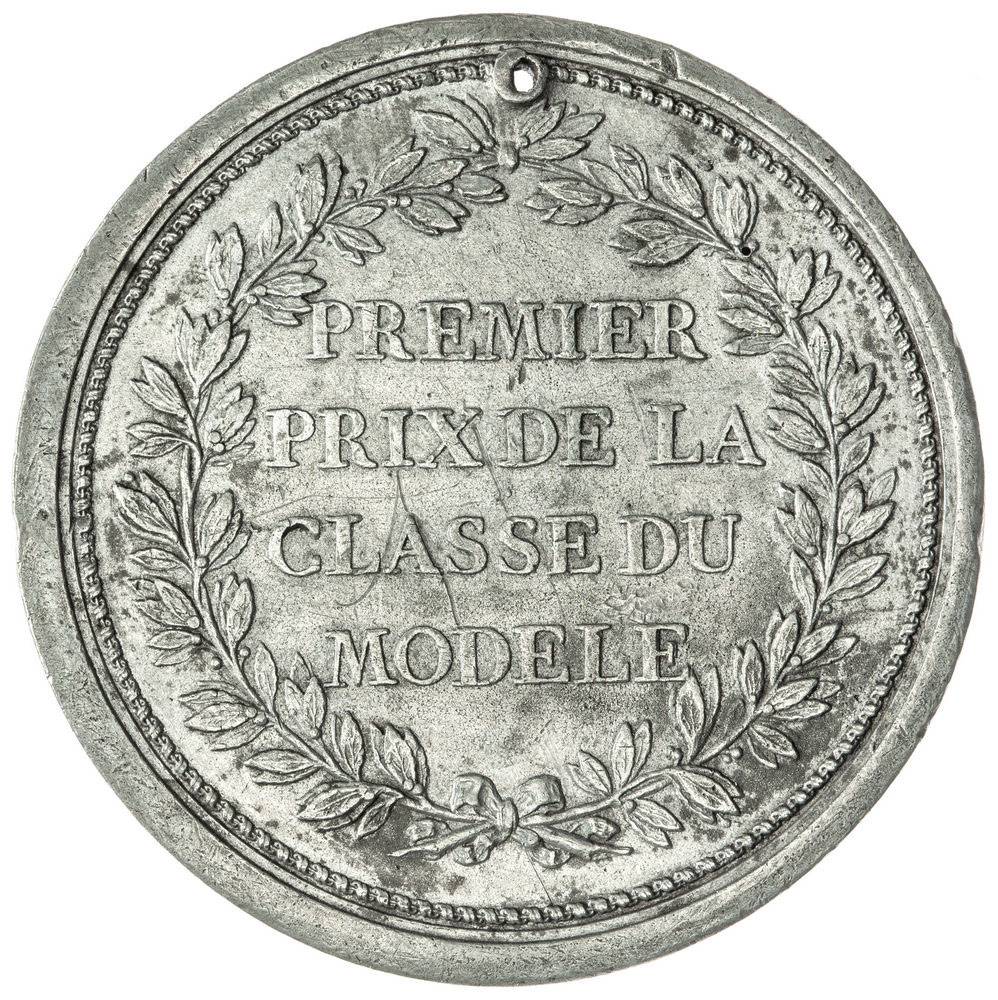
Despujol, Medal nagrodowy w klasie modelowania Akademii Malarstwa i Rzeźby w Valenciennes, po 1785/1786
Cyna, bity, śred. 56 mm, waga 71,2112 g, w górnej części medalu dziurka, nr inw. MNWr X-11487
❦
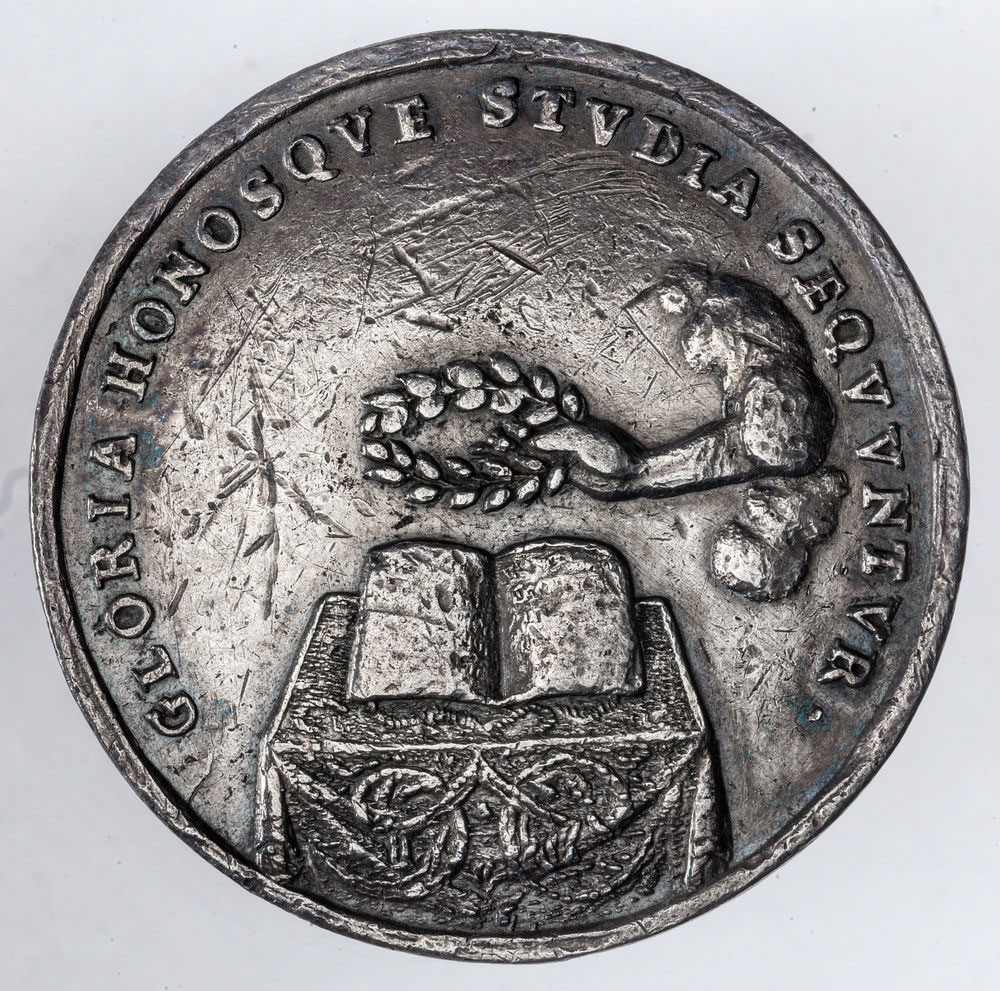
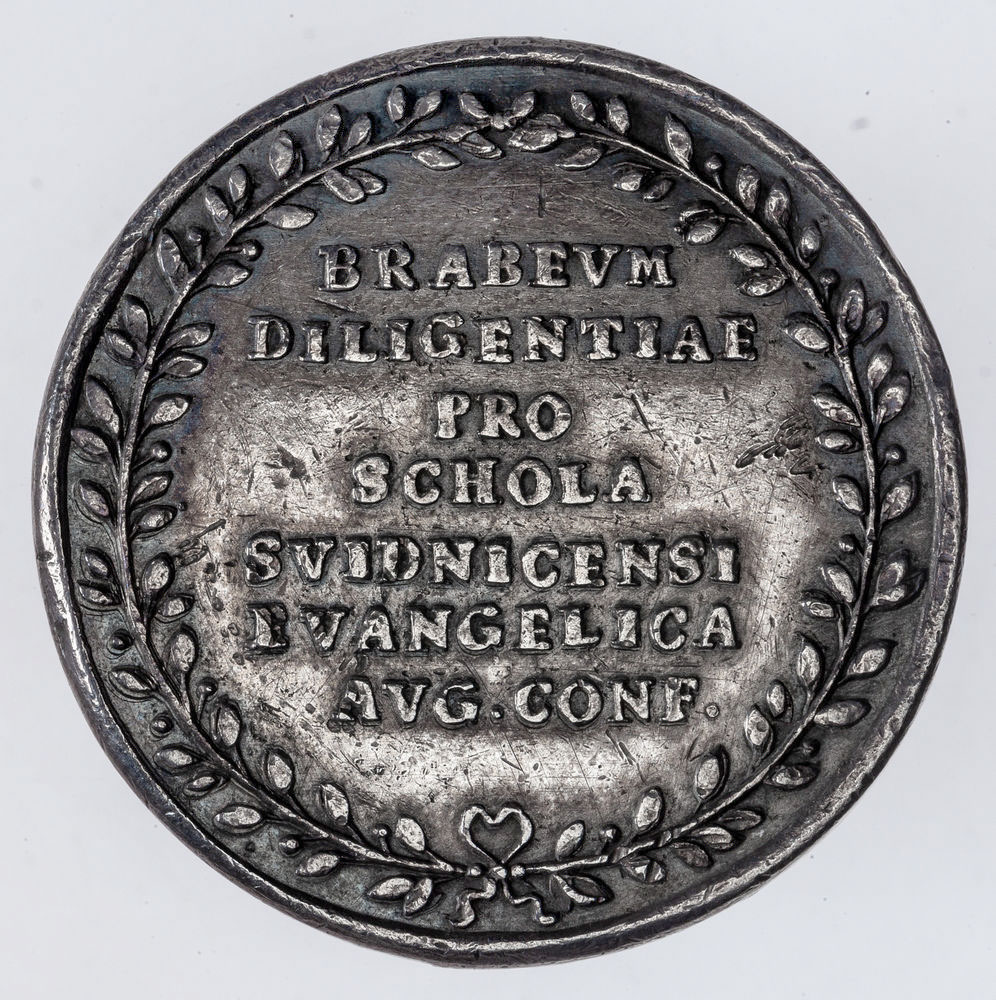
Autor nieznany, Medal nagrodowy dla uczniów liceum przy kościele pokoju w Świdnicy, kon. XVIII w.
Srebro, bity, śred. 35 mm, waga 23,5598 g, nr inw. MNWr X-19037
Fotografie: Wojciech Rogowicz
■ Medalierstwo z lat 1700–1799 w zbiorach Muzeum Narodowego we Wrocławiu [wystawa czasowa] ➸