
9 June – 30 August 2026
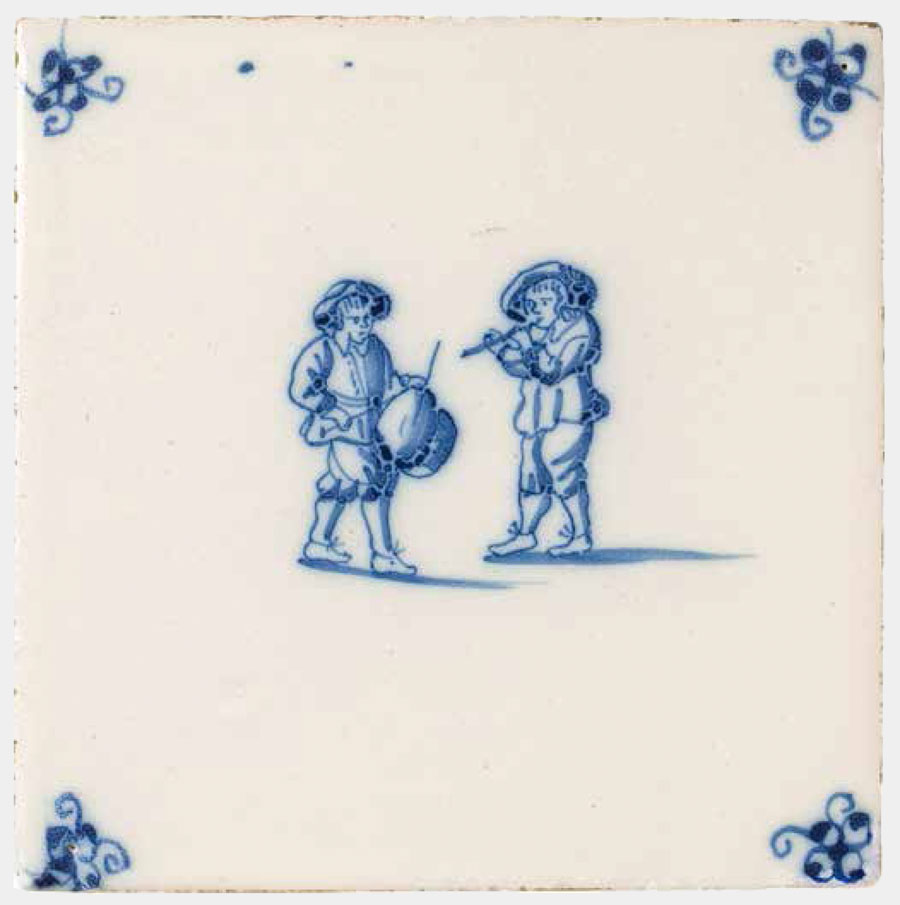
Fot. A. Podstawka
Curator of the exhibition: Jolanta Sozańska
The most valuable tiles from the collection of the National Museum in Wrocław are on show in this compact exhibition – mainly colourful Spanish azulejos, along with blue-and-white Dutch (Delft) tiles.
A ceramic tile (Ger. Fliese) is a thin square or rectangular covering crafted from baked clay, mostly used on walls. The Spanish learnt this type of decoration in the 10th century from their Arab invaders, who introduced their local tradition in Europe. The imported trend quickly found its local followers, as confirmed by the popular saying “no ava casa sin azulejos” (no home without tiles).
In the Low Countries, the fashion for ceramic wall tiles arrived in the 15th century along with Italian majolica. Their decorative potential in tiling walls was later coupled by the Dutch with providing protection from damp and dirt. In the early 17th century the Netherlands obtained a monopoly as a producer of tiles, also introducing the fashion as far afield as South America.
The exhibition is accompanied by a catalogue of the Museum collection.