
1 October – 30 December 2026
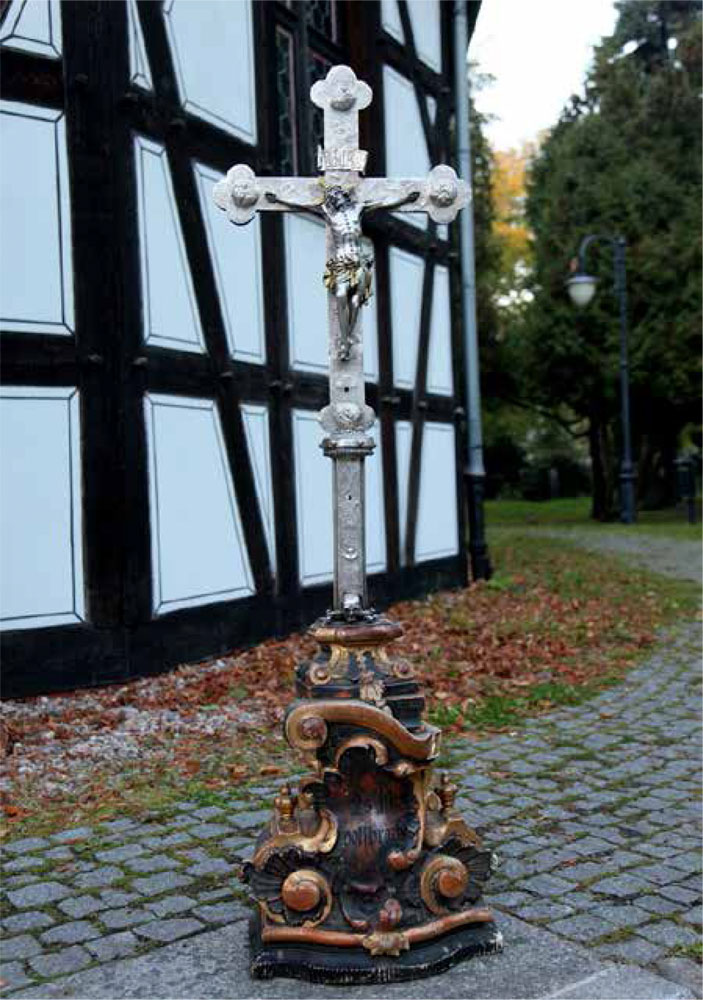
Fot. NMWr press materials
Curator of the exhibition: Dr. hab. Piotr Oszczanowski
Among the most valuable historical artistic monuments in Silesia are two well-preserved timber-framed structures, namely the Churches of Peace in Świdnica and in Jawor, dating from the mid-17th century and built under strict conditions imposed by the Peace of Westphalia (1648) which ended the Thirty Years’ War. Both were continuously embellished and furnished throughout the entire Baroque era, and their unmatched value and uniqueness was acknowledged by their inclusion in the UNESCO World Heritage List in 2001.
The exceptional value of these churches stems from their unique architectural form, as well as their furnishings and equipment, including the relatively lesser known items of goldsmith art, in particular liturgical vessels.
The exhibition presents the existing artefacts, and also exhibits loaned especially for this occasion by Lutheran places of worship and Churches of Peace, and museum collections (the National Museums in Gdańsk and in Wrocław, Germanisches Nationalmuseum in Nuremberg, Schlesisches Museum in Goerlitz, Muzeum Nadwiślańskie in Kazimierz Dolny, and Muzeum Dawnego Kupiectwa in Świdnica).
The exhibition showcases works by prominent Silesian Baroque goldsmiths, such as Tobias Plackwitz, Johann Gottlob Clement, Johann Carl Sigmund Graber and Johann Friedrich Wendrich.