
22 November 2026 – 31 January 2027
Curators of the presentation: the team at the Four Domes Pavilion Museum of Contemporary Art
Anna Baumgart, Andrzej Dudek-Dürer, Karolina Freino, Maria Jarema, Krzysztof Jung, Karol Radziszewski, Julita Wójcik and Liliana Zeic are the prominent artists whose works were acquired in 2026 for the collection of contemporary art at the Four Domes Pavilion Branch of the National Museum in Wrocław. Expanding the Museum collection was again possible owing to the support of the Ministry of Culture and National Heritage.
The project ”Expansion of the collection of the Museum of Contemporary Art at the Four Domes Pavilion Branch of the National Museum in Wrocław” is realised as part of the programme “The National Collection of Contemporary Art” introduced by the Minister of Culture and National Heritage.
”Purchasing artefacts for the collection of the Museum of Contemporary Art follows the strategy we have prepared for expanding our collection”, said Iwona D. Bigos, the manager of the Four Domes Pavilion. “We are enriching it by adding works by artists representing the Polish avant-garde, as was the case with the acquisition of the painting by Maria Jarema previously deposited with us. The Museum is also expanding the collection of works by artists connected with Wrocław – this year’s additions included pieces by Andrzej Dudek-Dürer. We are also enlarging the as yet underrepresented collection of examples of socially engaged art – this time by the sculptural realisations of Anna Baumgart and Julita Wójcik, along with the multimedia installation by Karolina Freino. We have also reacted to the contemporary socio-cultural discourse by introducing into our collection the voices of artists linked with the subject of non-normative sexuality, such as relief pictures by Liliana Zeic, a film made by Karol Radziszewski and photographs by Krzysztof Jung”.
The newly-acquired works can be viewed from 22 November 2026 to the end of February 2027 within the permanent exhibition “The collection of Polish art from the second half of the 20th century and the 21st century” in the Four Domes Pavilion Museum of Contemporary Art.
The exception is the video by Karolina Freino, which will be shown in 2027 during a special event, the date of which to be announced separately.
■ Anna Baumgart (b. 1966) ↡
Fot. A. Podstawka
A multimedia artist, creator of sculptures, installations, photographs, videos and performances, who gained a PhD in Arts, and a Diploma in Sculpture under the supervision of Professor Franciszek Duszeńko at the Academy of Fine Arts in Gdańsk. Her work is associated with the stream of critical art. The artist’s early pieces resulted from reflection on Nature and ecology understood as a philosophical stance. Alongside the works dedicated to relations between people and Nature, Baumgart also addressed feminist themes which are always present in her art. Her works have been on show in many museums in Poland and abroad, such as the Brooklyn Museum and the Jewish Museum in New York, Kunsthaus Dresden, KW Institute for Contemporary Art in Berlin, CSW Ujazdowski Castle, the Modern Art Museum and Zachęta – the National Art Gallery in Warsaw.
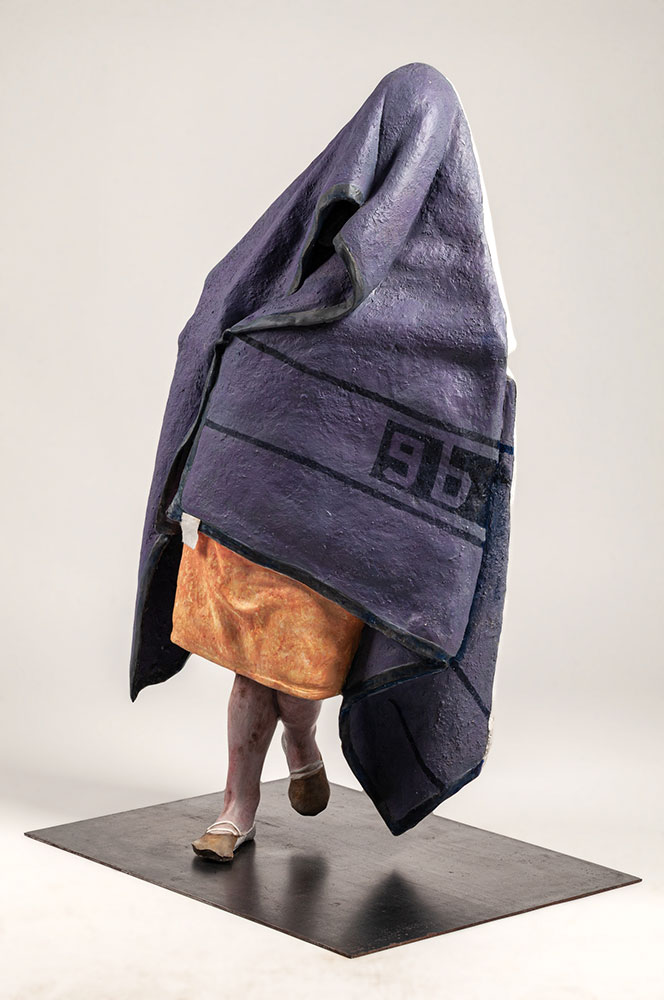
The newly acquired sculpture Natascha Kampusch (2007, resin, acrylic) refers to the mediatic image of the Austrian girl kidnapped aged 10 and imprisoned in her abductor’s cellar for many years. The subject of the work is not the girl herself but her photograph published in the whole world. It showed the girl surrounded by the police and psychologist moments after she escaped from her kidnapper. The image of Natascha Kampusch alone, transformed from a photograph into a 3D figure, tells us a lot about the contemporary oppressive world of the media. It points to the exploitation of persons’ images through putting them on public view, thus taking away their anonymity and depriving them of dignity, and at the same time prompts the question of whether the media show the actual world or perhaps just stage it, while obscuring the real image. Nearly 20 years after the work’s creation, in the current reality dominated by the uncontrollable social media, the issue signalled by the artist appears even more burning.
■ Andrzej Dudek-Dürer (b. 1953) ↡
Fot. A. Podstawka
A photographer, performer, graphic artist, composer and musician, one of the most original personages in the contemporary Polish art scene. For over five decades he has been developing the idea of life performance, blurring the boundaries between art and everyday life, treating his own existence as a constant piece of work and the process of spiritual and artistic transformation. Dudek has consistently built his artistic identity linked with the figure of Albrecht Dürer. His works are showcased in the collections of the greatest museums in the world, among others the Museum of Modern Art in New York, the Tate Modern in London and the Stedelijk Museum in Amsterdam.
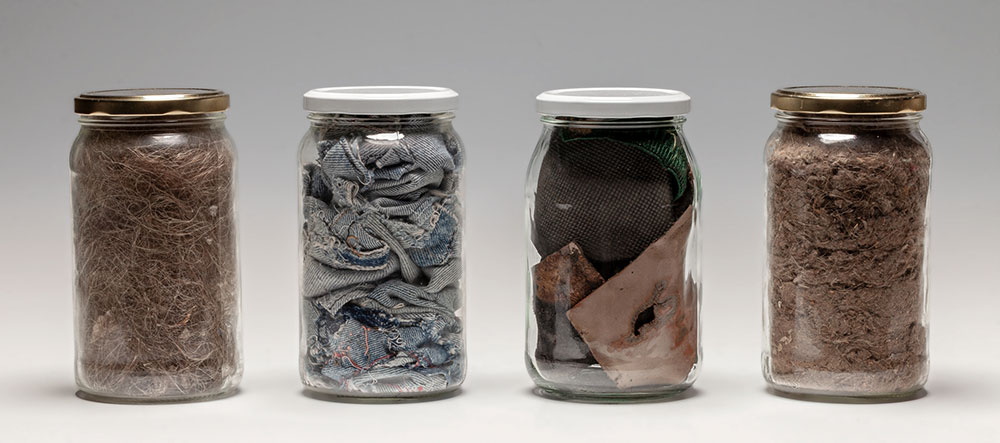
The MNWr collection of contemporary art has been extended by a series of Dudek-Dürer’s works: The Art of Shoes, The Art of Dust, The Art of Hair and The Art of Pants (1969–1990, mixed technique). The objects/assemblages were made of mixed materials, i.e. glass, faux leather, dust, hair and denim. They constitute a record of the time, the place, and their correlation. Dudek-Dürer includes in his artefacts items of clothing (e.g. shoes, trousers) which function as living performance objects, documenting the presence of the artist and his long-term artistic activity. They can be treated as a part of living sculpture archives, as well as a symbolic record of his existence and of the continuous process of transformation of the artist’s life.
■ Karolina Freino (b. 1978) ↡
Freino is one of the most interesting contemporary artists linked with Wrocław, and an important representative of the intermedia art scene in Poland. She studied sculpture at the Eugeniusz Geppert Academy of Fine Arts in Wrocław, where she is pursuing her professional and academic career (recently Dr hab. degree), whilst being active as an artist and scholar. Freino is also a graduate of the Edinburgh College of Art and Bauhaus Universität Weimar. She was awarded the scholarships by the Alfred Töpfer Stiftung (Foundation) and the Minister of Culture and National Heritage, with her work shown at exhibitions in Poland and abroad.
Freino’s art comprises sculptures, photography, videos, installations, performances and sound projects, with a special place dedicated to site-specific realisations strongly embedded in the context of urban and social space. The artist explores mechanisms of collective memory, the history of places, and the lives of excluded, invisible groups – migrants, minorities and local communities. Her works often take the form of subtle interventions in public space, demanding a close inspection, and their significance is revealed through reflecting on what is denied, forgotten or absent from the official discourse. Another important area of interest is the relation between people and Nature and the ecological aspect of contemporary reality, clearly visible in her work acquired for the MNWr collection of contemporary art.
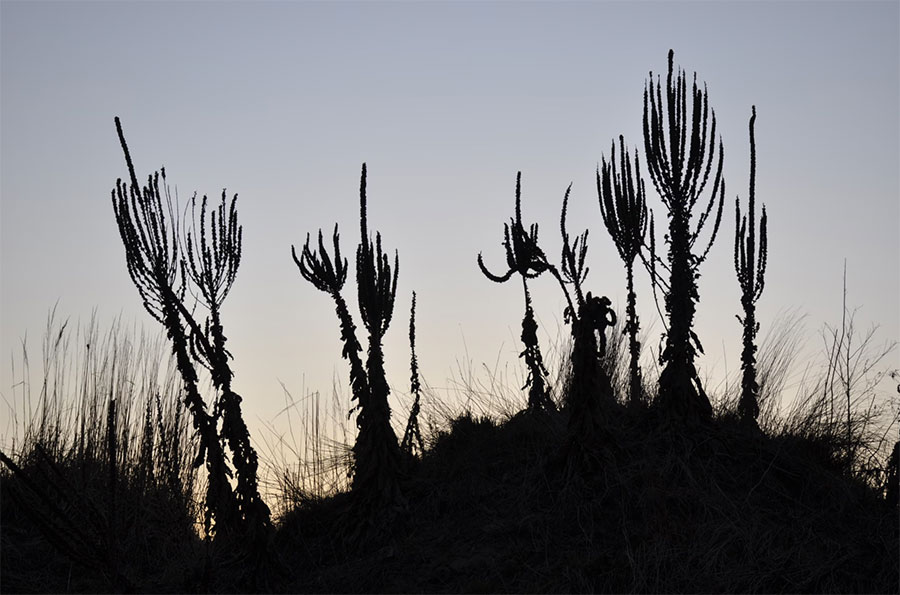
All Familiar Characters (2022) is the project exploring visual memory, the presence and the absence of human figures in the urban space and the way in which images – everyday as well as symbolic – organise our thinking about the place. The work belongs to an important stream of art examining town archives, microhistories and visual culture. A vital aspect of the project’s realisation was the critical reflection on the contemporary ecological and climate crises which lead to, among others, the extinction of biodiversity and the degradation of the natural environment.
■ Maria Jarema (1908–1958) ↡
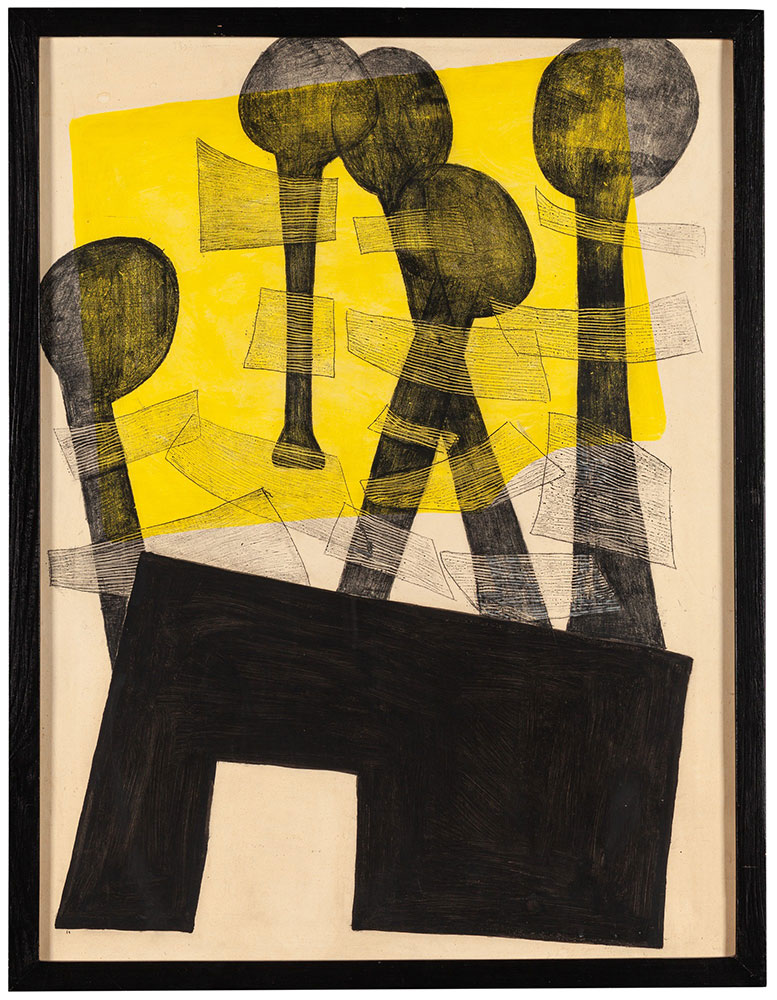
Maria Jarema was one of the most prominent personages of the Polish avant-garde art of the 20th century, a painter, sculptor, graphic artist, scenographer, costume and puppet designer, and an actress. She collaborated with the experimental theatres Cricot and Cricot 2. The artist was also a co-founder of the Cracow Group I, the Young Artists Group, and the Cracow Group II. In 1929–1935 she studied sculpture at the Academy of Fine Arts in Cracow under Xawery Dunikowski. In 1937, 1947 and 1957 Jarema was awarded scholarships in Paris. During the period of socialist realism, from 1949 to 1954 she retreated from the official artistic scene, to rejoin it at the time of the so-called ‘cultural thaw’. Jarema took part in numerous exhibitions in Poland and abroad, including all those showing the Cracow Group I, the legendary 1st Exhibition of Modern Art in Cracow (1948), Polish Art Today at The Kościuszko Foundation House in New York (1948), Prix Guggenheim at the Musee National d’art Moderne in Paris (1956), Internationale Ausstellung in Munich (1957), and the 29th Venice Biennale (1958) where she was awarded the Francesco Nullo Prize.
This current acquisition, Infinite Composition II (1958, tempera, monotype, paper, canvas), was one of the final works by the artist, dynamic, full of tension and highly personal. The strong shapes are wrapped in a web of delicate, soft, simply organic lines. The use of colours based on the clash of black and yellow may symbolise danger, and draws attention to the personal circumstances of the artist who was fighting a terminal illness, reflecting her fears while expressing her will to live.
■ Krzysztof Jung (1951–1998) ↡
Fot. Grzegorz Kowalski
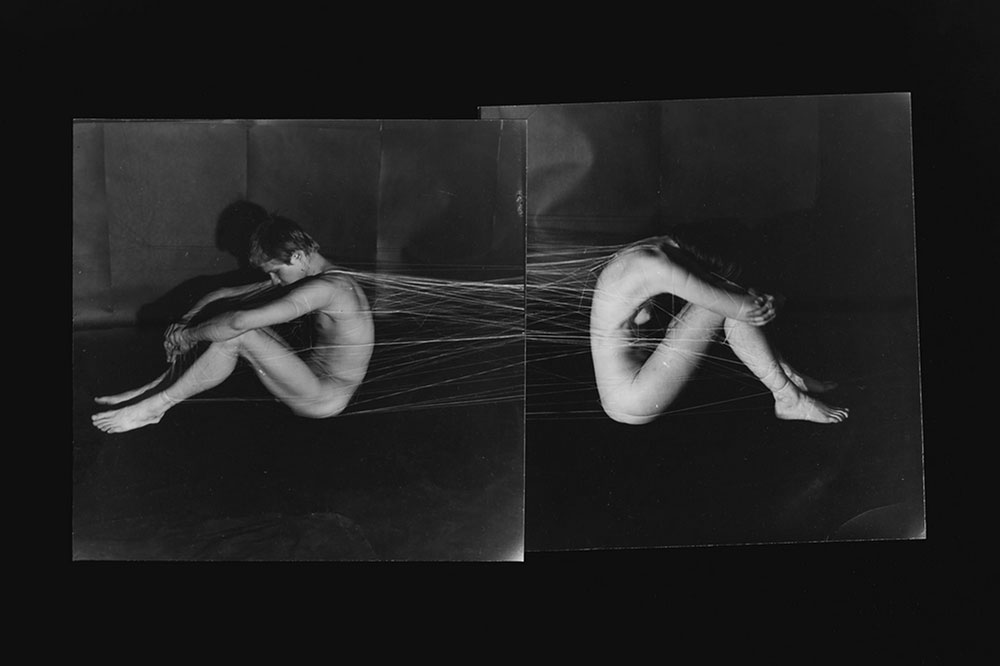
The artist who graduated from the Academy of Fine Arts in Warsaw was interested in photography, painting, drawing, graphic design and performance art. In the 1970s Jung was among the pioneers of performance art in Poland and co-run the Gallery Repassage in Warsaw. In his works he often used the motif of naked bodies entangled with a thread, examining the closeness, dependence and fragility of interpersonal relations. His art, today rediscovered again, occupies an important place in the history of Polish queer art, emphasising tenderness, memory and physicality as ways of resisting marginalisation.
The collection of contemporary art in the Four Domes Pavilion has been extended by purchasing twelve photographs documenting rehearsals of the performance Love (for Czesław Furmankiewicz) (1978, gelatine silver print). In his Gallery Repassage the artist sat back-to-back two of his friends – Mary Olejniczak and Jerzy Słomiński “Słoma” – joining their naked bodies with white thread, spun to create a cobweb-like structure. During the live show it was set on fire, and a member of the audience, Czesław Furmankiewicz, began to put out the flames with his bare hands, getting burns in the process, which led to the dedication Jung included in the title of this work.
■ Karol Radziszewski (b. 1980) ↡
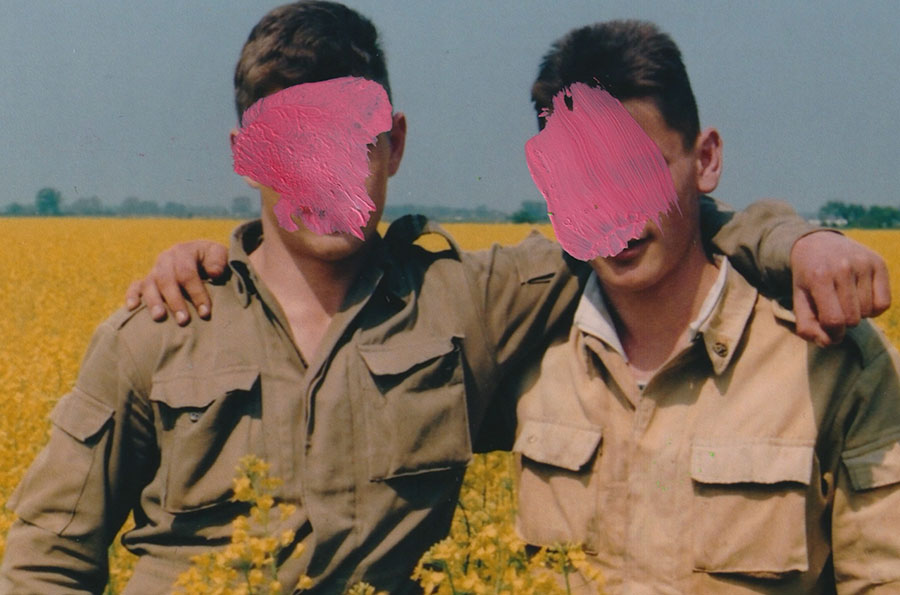
An artist and researcher, mainly engaged in retrieving and popularising the queer history of Central and Eastern Europe, who employs in his works such means as photography, film, painting and installation. He is the founder of the Institute of Queer Archives, the publisher and chief editor of “DIK Fagazine”. His works have been shown at numerous exhibitions in Poland and abroad, e.g. Centre Pompidou and Palais de Tokyo in Paris, the New Museum in New York, Zachęta – the National Art Gallery in Warsaw, and the Whitechapel Gallery in London. He was awarded “Paszport Polityki”[magazine] in the category of art (2009).
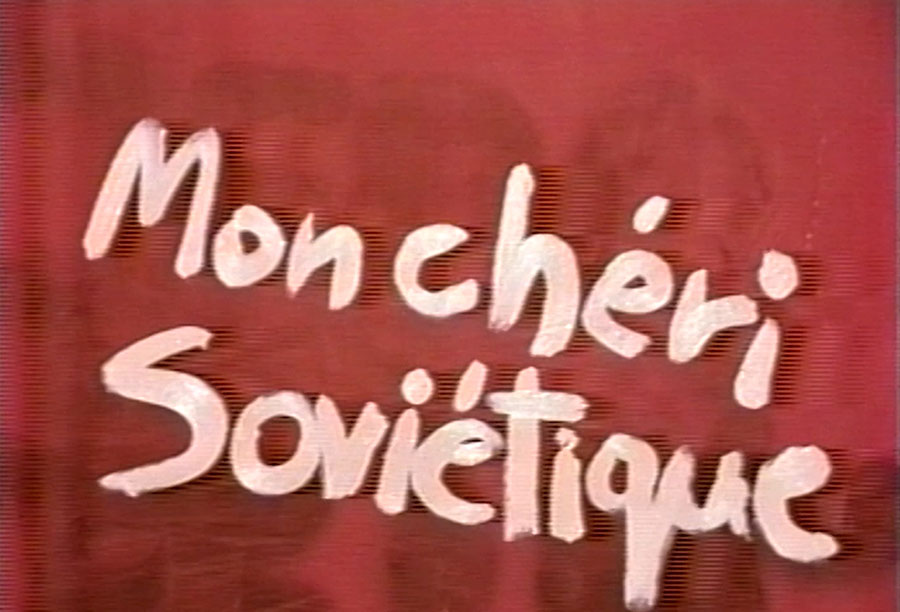
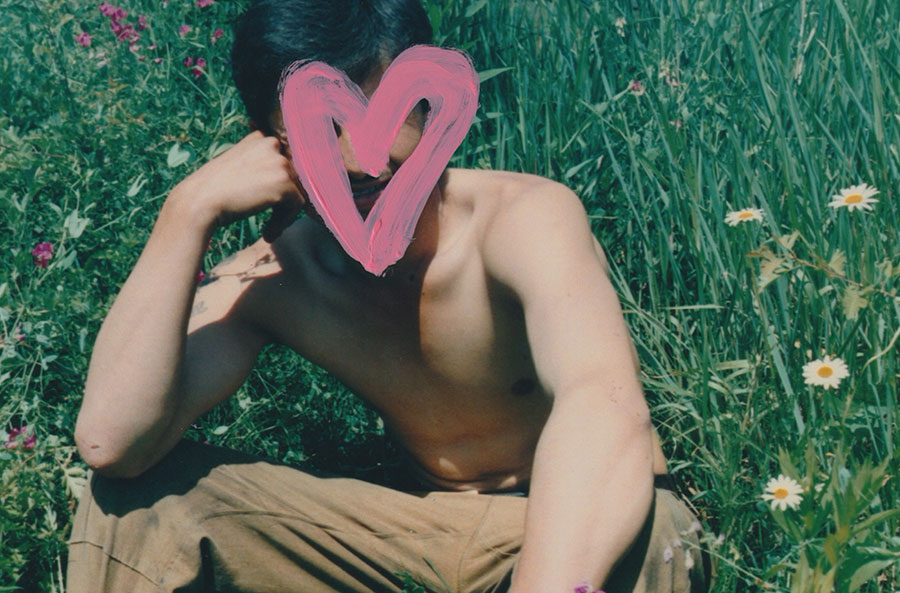
The newly acquired film “Mon chéri Soviétique”(2021) recalls the period of the early 1990s when the last soldiers of the Red Army were leaving Lower Silesia, which for decades hosted its largest garrisons in Poland. The artist showed an unexpected view of that moment, featuring a soldier depicted not as a brave defender but a young man taking off his uniform in front of the camera. The film was constructed out of hundreds of photos from the private archive, complemented by contemporary filmed reconstructions, in which an anonymous elderly man talks about soldiers. It remembers the photographer who spent many years creating that collection, and documented the common world of Polish gays and Soviet soldiers: their friendships, love affairs, rumours, and urban legends of the time of transformation.
■ Julita Wójcik (b. 1971) ↡
Fot. W. Rogowicz
A multimedia artist, sculptor, creator of installations and performances, who in a consistent and uncompromising way realises her own personal vision of art, using her unique artistic language which escapes definitions. She graduated in sculpture in the studio of Professor Franciszek Duszeńko at the Academy of Fine Arts in Gdańsk. Wójcik was awarded many prizes, including “Paszport Polityki” (2012) and the Royal Scottish Academy Award (2013), and multiple scholarships of the Minister of Culture and National Heritage. Her works have been on show in the most important international cultural institutions in Berlin, Vienna, Riga, Beijing, Jerusalem, and Warsaw.
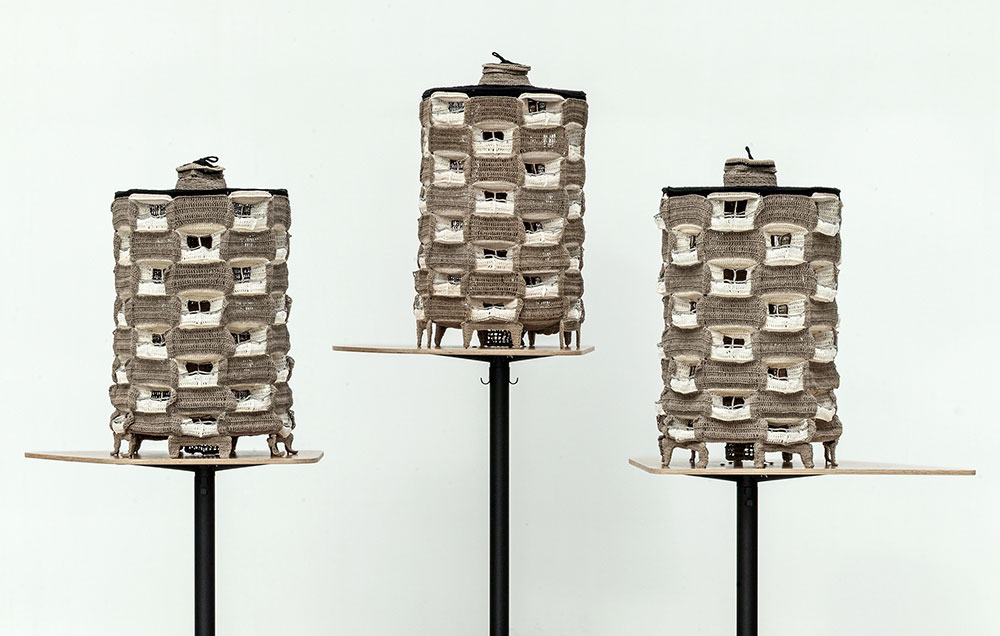
The purchased Rundhochhaus – Round Skyscrapers (2021, own technique, cotton yarn, twine, metal frame) are architectural sculptures, models of three brutalist skyscrapers in the city of Lahr in the western part of Germany. The Rundhochhäuser complex was built in 1959-1962 on the site of a French airbase. Originally the buildings served as accommodation for the stationed officers and their families, and in the period from 1967 to 1994 was inhabited by the Canadian NATO forces. Following the fall of the Berlin Wall, the complex was converted into council flats, and in the early 1990s mostly housed immigrants from Eastern Europe and Russia. The history of these buildings is a narrative about the social and ethical meaning of architecture, embroiled in the changing political scene in Europe.
■ Liliana Zeic (b. 1988) ↡
Fot. W. Rogowicz
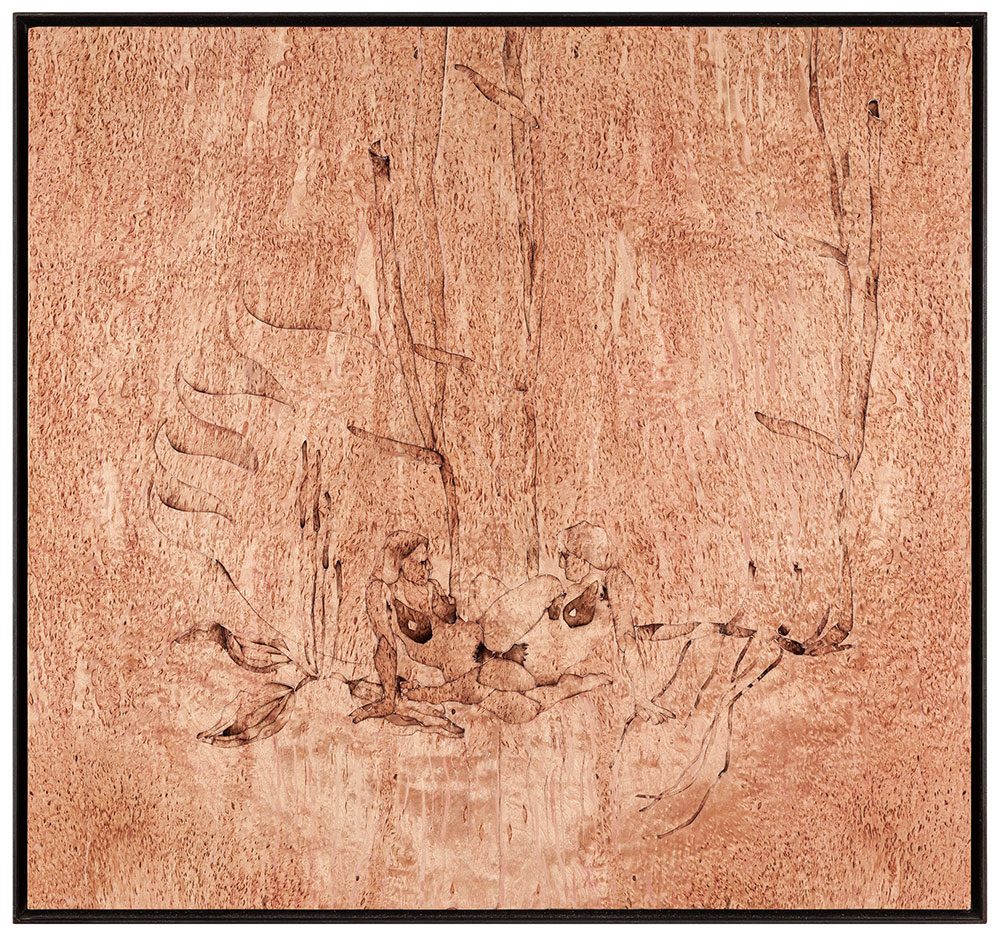
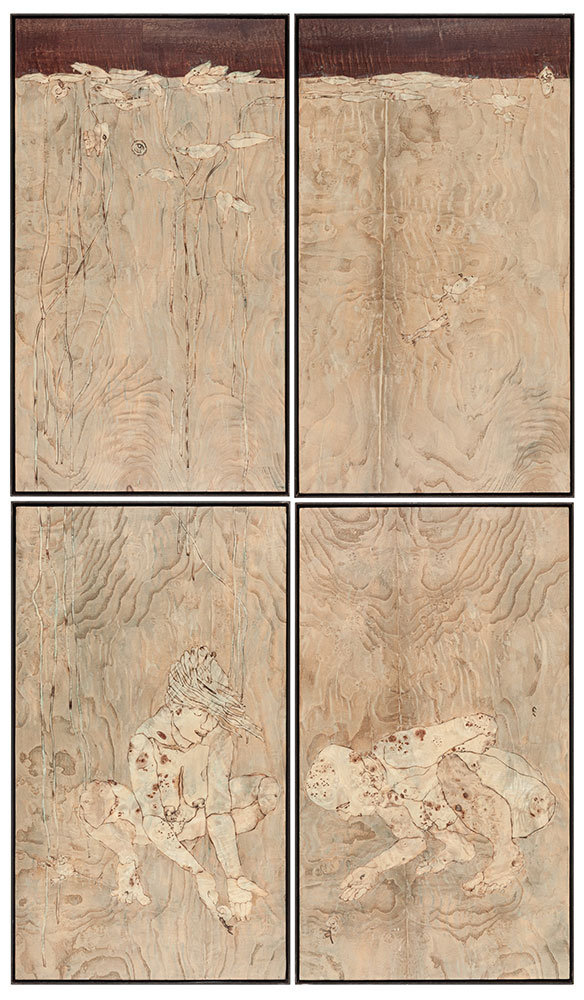
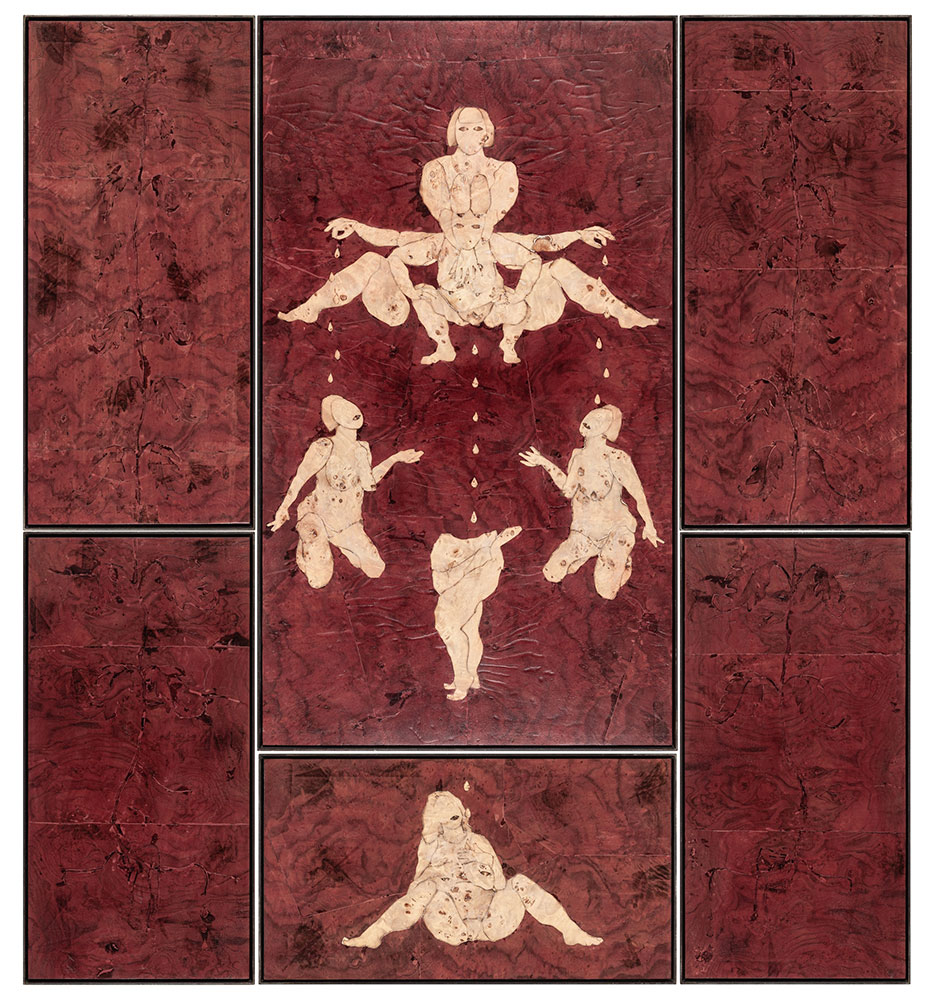
Zeic is a multimedia artist, performer, PhD in Fine Arts, and a lecturer at the Eugeniusz Geppert Academy of Fine Arts in Wrocław. She is one of the highly recognised artists of the new generation, awarded numerous prizes and distinctions. The artist employs craft techniques, photography, creates objects, videos and intermedia projects frequently based on artistic research. Starting from 2020, Zeic has been developing her own methods of woodwork, including the particularly decorative intarsia technique. Her artisan leanings stem directly from her personal biography, which includes experience of growing up in a village, close the carpentry workshop run by her parents.
The Museum acquired a series of works by Zeic dating from 2023–2025, made using the technique of intarsia. Her art has a deeply personal character, at the same time also local as regarding the meaning, symbolism, artistic skills and use of materials found locally. The leading aspect of her works is the feminist-queer perspective. In her artistic activities Zeic focuses on the relations between the Central European identity and non-heteronormative identities, between things political and personal. By revealing the process of social exclusion of femininity interpreted in a non-standard way, the artist affirms what is non-normative.
Purchase of artworks has been financed by the Ministry of Culture and National Heritage of Poland from the Fund for the Promotion of Culture – state earmarked fund
